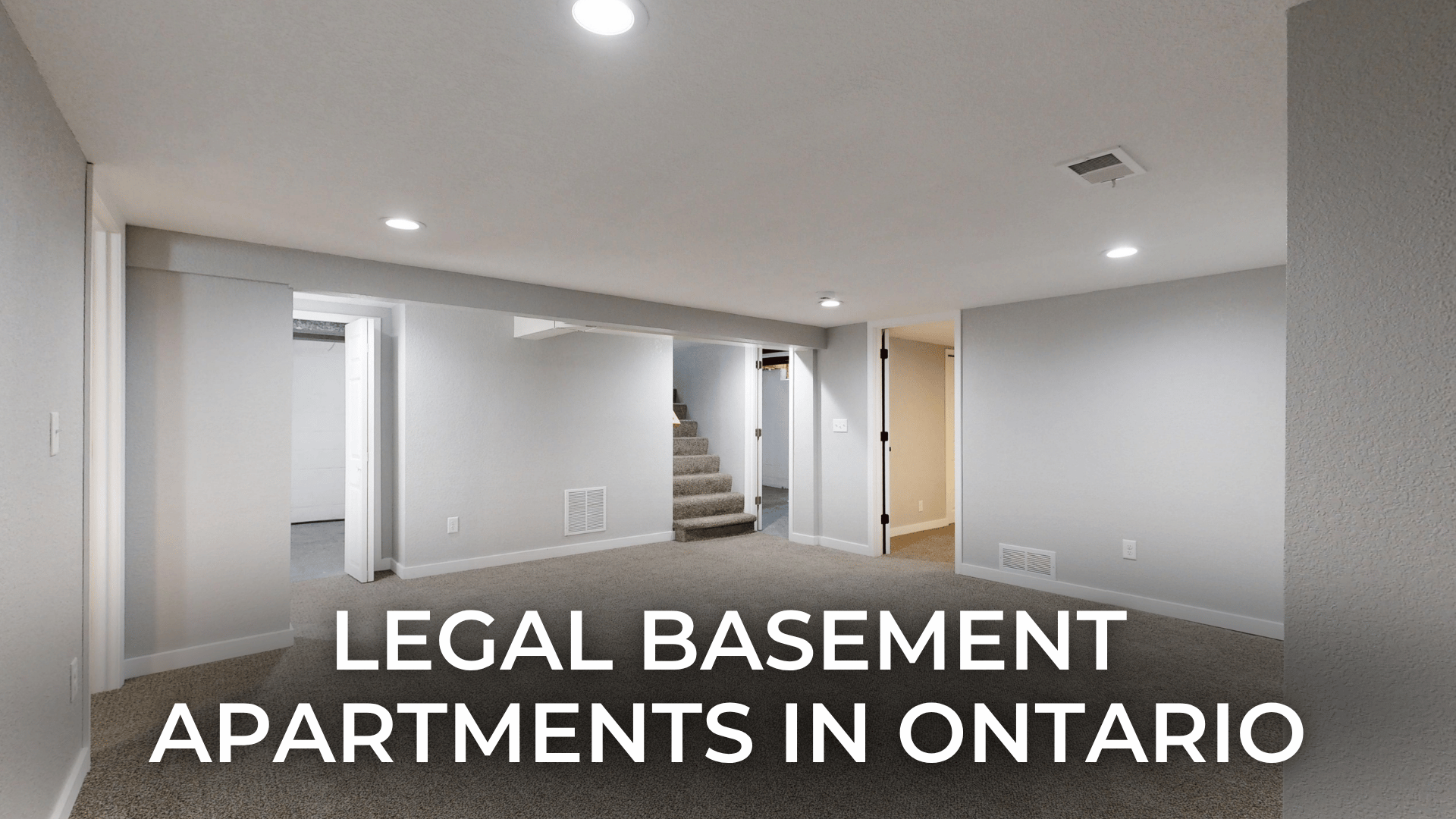
Legal basement apartments have become one of the most popular real estate topics in Ontario. With housing affordability pressure, higher mortgage payments, strong rental demand, and buyers looking for extra income potential, homes with legal secondary suites can be attractive for both end users and investors.
For buyers, a legal basement apartment may help offset monthly carrying costs. For investors, it can create an additional income stream and improve long-term property value. For sellers, a properly legal and well-documented basement apartment can make a home more appealing to buyers who are looking for rental potential.
However, not every finished basement is legal. A basement with a bedroom, kitchen, and washroom does not automatically qualify as a legal apartment. In Ontario, buyers and investors must review zoning, building permits, fire separation, ceiling height, exits, windows, electrical safety, parking, municipal registration where required, and landlord-tenant responsibilities.
The Government of Ontario advises homeowners to check municipal zoning, building permits, Building Code requirements, and inspections before adding a second unit to a house. Source: Ontario.ca — Add a Second Unit in Your House.
This guide explains what legal basement apartments are, why they matter, what buyers should verify, what investors should calculate, and how Team Arora can help clients make informed decisions across Brampton, Mississauga, Etobicoke, Toronto, the GTA, and other Ontario markets.
Table of Contents
- What Is a Legal Basement Apartment?
- Why Legal Basement Apartments Are Popular in Ontario
- Legal Basement vs Finished Basement
- Common Requirements for Legal Basement Apartments
- Buyer Guide: What to Check Before Buying
- Investor Guide: Rental Income and ROI Considerations
- Risks of Buying a Non-Legal Basement Apartment
- Financing and Mortgage Considerations
- Landlord Responsibilities in Ontario
- City Examples: Brampton, Mississauga, Toronto, and GTA
- Legal Basement Apartment Buyer Checklist
- How Team Arora Can Help
- Frequently Asked Questions
- Professional Disclaimer
- Sources and Citations
What Is a Legal Basement Apartment?
A legal basement apartment is a self-contained residential unit located inside the lower level of a home. It usually includes its own sleeping area, kitchen, washroom, living space, and a separate entrance or approved access. In Ontario, these units are often called secondary suites, second units, additional residential units, basement apartments, accessory apartments, or additional dwelling units.
The City of Toronto describes a secondary suite as a second dwelling unit, smaller in area than the primary unit, located in an existing detached house, semi-detached house, or townhouse. Toronto also notes that a common example of a secondary suite is a basement apartment. Source: City of Toronto — Secondary Suites.
In simple terms, a legal basement apartment must be more than just a finished basement. It must be approved, safe, and compliant with the rules that apply to the property.
Practical rule: A finished basement is not automatically a legal basement apartment. Legal status depends on zoning, permits, inspections, safety requirements, and municipal rules.
A legal basement apartment usually includes:
- A separate living area
- A kitchen or cooking facilities
- A washroom
- A sleeping area
- Proper exits or egress
- Fire separation between units
- Smoke and carbon monoxide alarms
- Safe electrical work
- Required building permits and inspections
- Compliance with local zoning and municipal rules
Why Legal Basement Apartments Are Popular in Ontario
Legal basement apartments are popular because they solve several real estate problems at once. They can create more rental housing, help homeowners manage mortgage payments, and give investors another income source.
Ontario’s housing market has become more affordability-sensitive. Many buyers are looking for properties that can help reduce monthly expenses. A legal basement apartment may provide rental income that helps with the mortgage, property taxes, utilities, and other carrying costs.
For investors, a home with a legal basement apartment can create a stronger income profile than a single-family home with no rental unit. For multigenerational families, a basement apartment can also create private space for parents, adult children, or extended family members.
Why buyers like legal basement apartments:
- Potential rental income to help with mortgage payments
- Flexibility for extended family living
- More usable space in the home
- Possible stronger resale appeal
- Better use of an existing property
- Potential support for long-term affordability
Why investors like legal basement apartments:
- Additional rental income stream
- Better cash-flow potential
- Higher rental flexibility
- Potentially stronger tenant demand
- Improved property utility
- Potentially stronger long-term value if properly legalized
Legal Basement vs Finished Basement
One of the biggest mistakes buyers make is assuming that a finished basement is the same as a legal basement apartment. They are very different.
A finished basement may have flooring, drywall, pot lights, a washroom, and a bedroom. It may look beautiful in photos. But if it does not have permits, inspections, proper fire safety, egress, and municipal compliance, it may not be legal as a separate rental unit.
A legal basement apartment, on the other hand, should have documentation that supports its status. This may include permits, inspection records, municipal registration where required, ESA-related electrical documentation, fire safety compliance, and proof that the unit meets applicable zoning and Building Code requirements.
| Feature | Finished Basement | Legal Basement Apartment |
|---|---|---|
| Can look renovated | Yes | Yes |
| Has kitchen or washroom | May have | Usually required for a self-contained unit |
| Building permit | Not always | Should be confirmed |
| Fire separation | Not always | Must meet applicable requirements |
| Legal rental use | Not guaranteed | Must comply with zoning, permits, and safety rules |
| Best for rental income | Risky if not legal | More reliable if properly approved |
Practical rule: Buyers should ask for proof, not just photos. A basement apartment should be verified through documents, permits, and professional due diligence.
Common Requirements for Legal Basement Apartments
Requirements can vary depending on the municipality, property type, age of the home, zoning, building design, and the specific work being completed. Buyers and owners should always confirm requirements with the local municipality and qualified professionals.
The Government of Ontario advises homeowners to consider municipal zoning requirements, building permits, Building Code compliance, and building inspections when adding a second unit. Source: Ontario.ca — Add a Second Unit in Your House.
Ontario Regulation 462/24 also addresses additional residential units, including circumstances where additional units may be permitted in detached houses, semi-detached houses, rowhouses, and ancillary buildings, subject to the regulation and applicable rules. Source: Ontario Regulation 462/24 — Additional Residential Units.
Common areas reviewed for legal basement apartments:
- Zoning: The property must be permitted to have an additional residential unit under applicable municipal rules.
- Building permit: Construction or conversion usually requires a building permit before work begins.
- Inspections: Municipal inspections are typically required during and after construction.
- Fire separation: The units must be properly separated to slow the spread of fire and smoke.
- Smoke alarms: Smoke alarms must be installed as required by applicable rules.
- Carbon monoxide alarms: Carbon monoxide alarms may be required depending on fuel-burning appliances, attached garages, and applicable rules.
- Egress: Occupants must have safe ways to exit in an emergency.
- Windows: Bedrooms and living areas may have specific window and ventilation requirements.
- Ceiling height: Minimum height requirements may apply depending on the design and code path.
- Electrical safety: Electrical work should be completed and inspected as required.
- Plumbing and HVAC: Heating, ventilation, drainage, and plumbing must be reviewed for compliance.
- Parking: Some municipalities have parking rules or registration requirements.
- Registration or licensing: Some cities require registration or licensing of second units.
Buyer Guide: What to Check Before Buying
If you are buying a home with a basement apartment, your first question should be: “Is it legal, and can the seller prove it?”
Do not rely only on MLS remarks, verbal statements, or the existence of a tenant. Buyers should ask for supporting documents and confirm details with the municipality, lawyer, realtor, lender, home inspector, insurance provider, and other qualified professionals.
Documents buyers should request:
- Building permits related to the basement apartment
- Final inspection reports or occupancy confirmation, where available
- Municipal registration or licensing confirmation, if applicable
- Fire inspection or fire safety documentation, if applicable
- ESA or electrical inspection documentation, if applicable
- Floor plans or permit drawings
- Proof of legal second-unit status from the municipality, where available
- Lease agreement if the unit is currently tenanted
- Rental income records
- Utility separation details
- Insurance information
Important buyer questions:
- Is the basement apartment registered or recognized by the municipality?
- Were permits obtained for the basement conversion?
- Were final inspections completed?
- Is the current use permitted under zoning?
- Does the unit meet fire safety and Building Code requirements?
- Is the unit currently rented?
- Does the tenant have a valid lease?
- Is rent controlled or exempt from rent control?
- Are utilities separate or shared?
- Does the lender accept the rental income for qualification?
- Will the insurance company insure the property as a two-unit dwelling?
Investor Guide: Rental Income and ROI Considerations
For investors, a legal basement apartment can be a strong income feature. However, the property still needs to make financial sense. Do not assume that rental income automatically means positive cash flow.
Investors should calculate the full cost of ownership, including mortgage payments, property taxes, insurance, repairs, utilities, maintenance, vacancy, property management, and future capital expenses.
Investor costs to review:
- Purchase price
- Down payment
- Mortgage payment
- Interest rate and renewal risk
- Property taxes
- Insurance for a rental or two-unit property
- Utilities
- Repairs and maintenance
- Vacancy allowance
- Property management fees, if applicable
- Legal and accounting costs
- Renovation or legalization costs
- Future capital repairs such as roof, furnace, windows, and appliances
Investor income questions:
- What is the realistic market rent for the basement apartment?
- Is the unit already rented?
- Is the current rent below market?
- Are utilities included in rent?
- Is there separate laundry?
- Does the basement have a separate entrance?
- Does the unit have parking?
- Is the tenant profile strong in the area?
- What is the vacancy risk?
- Will the rent support the carrying costs?
Practical rule: A legal basement apartment can improve income potential, but investors should buy based on verified numbers, not optimistic rent assumptions.
Risks of Buying a Non-Legal Basement Apartment
A non-legal basement apartment can create serious problems for buyers and investors. Even if the unit is currently rented, the municipality may not recognize it as a legal rental unit.
If a basement apartment is not legal, the owner may face orders to comply, expensive renovations, tenant issues, insurance problems, financing challenges, and resale concerns. In some cases, the owner may need to remove the kitchen, stop renting the unit, or complete major work to bring the space into compliance.
Common risks of non-legal basement apartments:
- Municipal enforcement or compliance orders
- Unsafe fire separation or exit conditions
- Insurance coverage issues
- Lender concerns about using rental income
- Difficulty selling later
- Unexpected renovation costs
- Tenant disputes
- Possible inability to legally rent the unit
- Higher liability risk for the owner
- Lower buyer confidence at resale
This does not mean every home with an unfinished or non-legal basement should be avoided. It means buyers must price the risk correctly and understand what work may be needed to legalize the unit.
Financing and Mortgage Considerations
Legal basement apartments can affect financing in several ways. Some lenders may consider rental income when qualifying a buyer, but the rules vary by lender, mortgage product, documentation, and whether the unit is legal and properly documented.
Buyers should speak with a mortgage professional before assuming that basement rental income will increase their approved mortgage amount. Lenders may require lease agreements, market rent appraisals, proof of legality, income statements, tax documentation, or other verification.
CMHC has a refinance program designed to help eligible homeowners refinance their existing property to create self-contained secondary suites. CMHC notes that the secondary suite must be self-contained and cannot be used as a short-term rental. Source: CMHC — Refinance for Building Secondary Suites.
Mortgage questions buyers should ask:
- Will the lender include rental income in qualification?
- What documents are required to use rental income?
- Does the basement apartment need to be legal and registered?
- Is a lease required?
- Can projected market rent be used?
- Does the property qualify as owner-occupied or investment?
- Will insurance costs be higher?
- How will future rate changes affect cash flow?
Landlord Responsibilities in Ontario
Owning a legal basement apartment also means becoming a landlord if the unit is rented. In Ontario, most residential rental relationships are governed by the Residential Tenancies Act, 2006.
Ontario’s renting rights page explains that the Landlord and Tenant Board is the tribunal with authority to resolve disagreements between landlords and tenants and provide information about rights and responsibilities under the Residential Tenancies Act, 2006. Source: Ontario.ca — Renting in Ontario: Your Rights.
The Landlord and Tenant Board also provides a guide explaining that the Residential Tenancies Act sets out the rights and responsibilities of landlords and tenants who rent residential properties. Source: Landlord and Tenant Board — Guide to the Residential Tenancies Act.
Landlords should understand:
- Ontario standard lease requirements
- Rent deposit rules
- Rent increase guidelines
- Maintenance and repair responsibilities
- Privacy and entry notice rules
- Eviction procedures
- Tenant rights and responsibilities
- Landlord and Tenant Board processes
- Human rights and discrimination rules
- Municipal property standards
Practical rule: Buying a home with a legal basement apartment is not only a real estate decision. It can also make you a landlord, which comes with legal responsibilities.
City Examples: Brampton, Mississauga, Toronto, and GTA
Legal basement apartment rules are shaped by both provincial and municipal requirements. Ontario provides the broader framework, but municipalities may have their own zoning, registration, licensing, parking, and inspection processes.
Brampton
Brampton has strong demand for homes with legal basement apartments because many buyers are family-focused and mortgage-conscious. Buyers should verify whether a second unit is registered and legal through the City of Brampton before relying on rental income.
Mississauga
Mississauga buyers often look for flexible housing options, especially in family neighbourhoods. A properly approved basement apartment can increase buyer interest, but documentation matters. Buyers should confirm legal status directly with the City of Mississauga and their lawyer.
Toronto and Etobicoke
Toronto’s secondary suite guidance confirms that a building permit is required for an interior alteration to add a second dwelling unit in an existing detached house, semi-detached house, or townhouse. A basement apartment is listed as a common example. Source: City of Toronto — Secondary Suites.
Other Ontario Markets
In markets such as Cambridge, Kitchener-Waterloo, Hamilton, Halton Hills, Niagara, and Fort Erie, legal basement apartments may also be attractive to buyers and investors. However, each municipality has its own rules and process. Buyers should verify everything locally.
Legal Basement Apartment Buyer Checklist
Before buying a home with a basement apartment, use this checklist as a starting point.
- Confirm whether the basement apartment is legal.
- Ask for building permits and final inspection documents.
- Verify municipal registration or licensing if applicable.
- Confirm zoning permits the additional residential unit.
- Review fire separation and safety features.
- Confirm smoke and carbon monoxide alarm requirements.
- Ask about ESA or electrical inspection documentation.
- Review separate entrance and egress details.
- Confirm whether the unit is currently tenanted.
- Review the lease agreement and rent amount.
- Check whether utilities are separate or shared.
- Ask whether parking is included or required.
- Speak with a mortgage professional about rental income use.
- Confirm insurance coverage for a two-unit property.
- Have your lawyer review all documentation before firming up the deal.
- Complete a home inspection with attention to basement safety and quality.
- Review landlord responsibilities under Ontario rental rules.
How Team Arora Can Help
Team Arora helps buyers, sellers, and investors understand the real value and risks of homes with basement apartments. These properties can be powerful opportunities, but they require careful review.
For buyers, Team Arora can help identify homes with legal basement potential, review listing claims, compare rental income opportunities, and connect clients with the right professionals for due diligence. For sellers, Team Arora can help position a legal basement apartment properly in marketing, highlight income potential, and ensure buyers understand the value of proper documentation.
Team Arora can help with:
- Finding homes with legal basement apartments
- Identifying properties with basement potential
- Reviewing listing information and seller disclosures
- Comparing rental income potential
- Connecting clients with mortgage professionals
- Connecting clients with lawyers and inspectors
- Helping sellers market legal basement features
- Pricing homes with income potential
- Supporting investors with property comparisons
- Guiding clients across Brampton, Mississauga, Etobicoke, Toronto, the GTA, and other Ontario markets
If you are planning to buy, sell, or invest in a home with a basement apartment, Team Arora can help you ask the right questions and move forward with confidence.
Frequently Asked Questions
What is a legal basement apartment in Ontario?
A legal basement apartment is a self-contained residential unit in the lower level of a home that meets applicable zoning, building, safety, permit, and municipal requirements. It usually includes a kitchen, washroom, living area, sleeping area, and approved exits or access.
Is every finished basement apartment legal?
No. A finished basement is not automatically legal. Even if it has a kitchen, washroom, bedroom, and separate entrance, it still needs to comply with zoning, Building Code requirements, permits, inspections, fire safety, electrical safety, and municipal rules.
How do I know if a basement apartment is legal?
Ask for permits, final inspections, municipal registration or licensing if applicable, fire safety documentation, ESA or electrical documentation where applicable, and confirmation from the local municipality. Your lawyer, realtor, inspector, and municipality can help verify the status.
Can rental income from a basement apartment help with mortgage qualification?
Sometimes, yes. Some lenders may consider rental income, but requirements vary. The lender may ask for proof of legal status, lease documents, market rent estimates, or income history. Buyers should confirm with a mortgage professional before relying on rental income.
Is a legal basement apartment good for investors?
A legal basement apartment can be attractive for investors because it may create additional rental income. However, investors should calculate full carrying costs, vacancy risk, repairs, insurance, taxes, rent rules, financing, and resale value before buying.
What are the risks of buying a house with an illegal basement apartment?
Risks can include municipal enforcement, renovation costs, insurance issues, financing challenges, inability to rent legally, tenant disputes, safety concerns, and lower resale confidence. Buyers should verify legality before relying on rental income.
Do legal basement apartments need a permit?
Creating a legal basement apartment usually requires building permits and inspections. Requirements depend on the municipality and scope of work. Buyers and owners should contact the local building department before starting or relying on any conversion.
Do municipalities have different rules for basement apartments?
Yes. Ontario provides a broader framework, but municipalities may have their own zoning, parking, registration, licensing, inspection, and property standards rules. Always confirm locally.
Can I rent out a basement apartment on Airbnb?
Short-term rental rules vary by municipality and may be different from long-term rental rules. Some financing or housing programs may also restrict short-term rental use. Owners should confirm local short-term rental regulations, condo rules if applicable, insurance requirements, and tax implications.
How can Team Arora help with legal basement apartment properties?
Team Arora can help buyers find suitable properties, review income potential, compare neighbourhoods, ask the right due-diligence questions, and connect clients with mortgage, legal, inspection, and municipal resources. For sellers, Team Arora can help market legal basement features and position the property effectively.
Professional Disclaimer
This article is provided for general informational and real estate marketing purposes only. It should not be treated as legal, financial, mortgage, tax, investment, appraisal, insurance, construction, building-code, landlord-tenant, or real estate advice.
Legal basement apartment requirements can vary by municipality, property type, zoning, building age, construction details, permit history, fire safety requirements, electrical work, parking rules, licensing requirements, and provincial or municipal law changes. Buyers, sellers, landlords, and investors should verify all information directly with the local municipality, building department, fire department, Electrical Safety Authority where applicable, lender, insurer, lawyer, accountant, home inspector, and other qualified professionals.
This article does not guarantee that any specific basement apartment is legal, rentable, insurable, financeable, or compliant. Rental income, property value, resale demand, cash flow, and return on investment are not guaranteed.
Landlord-tenant rules in Ontario can be complex. Before renting a unit, increasing rent, ending a tenancy, buying a tenanted property, or making investment decisions, readers should seek proper legal and professional advice.
Sources and Citations
Ontario.ca — Add a Second Unit in Your House
— Provincial guidance on second units, municipal zoning, building permits, Building Code compliance, and inspections.
Ontario Regulation 462/24 — Additional Residential Units
— Ontario regulation addressing additional residential units in detached houses, semi-detached houses, rowhouses, and ancillary structures.
City of Toronto — Secondary Suites
— Toronto building permit guidance for adding a second dwelling unit, including basement apartments as a common example.
CMHC — Refinance for Building Secondary Suites
— CMHC refinance program information for homeowners creating self-contained secondary suites.
Ontario.ca — Renting in Ontario: Your Rights
— Ontario renting rights, Landlord and Tenant Board information, and Residential Tenancies Act context.
Landlord and Tenant Board — Guide to the Residential Tenancies Act
— Summary of landlord and tenant rights and responsibilities under Ontario’s Residential Tenancies Act.
Legal basement apartments can be a smart opportunity for Ontario buyers and investors, but only when the unit is properly verified. The right property can support affordability, rental income, and resale value. The wrong property can create legal, financial, safety, and insurance problems. Before buying or selling, work with experienced professionals and confirm every detail carefully.