How Can You Sell a House Without an Agent, Realtor, or Broker in Canada?

When most Canadians think about selling a house, hiring a real estate agent or broker is usually the first step that comes to mind. But did you know that you don’t necessarily need an agent to sell your home? More and more sellers are exploring ways to handle the sale themselves, especially with the rise of digital platforms and tools.

So, how exactly can you sell your home without an agent, realtor, or broker? Let’s explore the process, benefits, challenges, and steps you need to take to succeed.

Why Would Someone Choose to Sell Without a Realtor in Canada?

There are two main reasons: saving money on commission and maintaining control.

  • Saving on Commission Fees: In Canada, real estate commissions are usually 4–6% of the sale price, often split between the buyer’s and seller’s agents. On a $700,000 home in Brampton or Mississauga, that could mean $28,000–$42,000 in fees. By selling privately, you may save a substantial amount.
  • Control Over the Process: Some homeowners want to be more involved, from setting the price to negotiating with buyers. Selling privately allows you to take the lead without relying on someone else’s timeline or strategies.

Is It Legal to Sell a House Without an Agent in Canada?

Yes — absolutely. Canadian homeowners are legally allowed to sell their property without hiring a licensed real estate agent. While it’s legal, it requires you to handle the marketing, negotiations, paperwork, and legal processes yourself.

How Do You Price Your Home Without a Realtor?

Pricing is one of the most challenging steps without an agent. Here’s how you can do it:

Research Comparable Sales (Comps): Look at recently sold homes in your neighborhood. Focus on similar size, features, and location.

Use Online Tools: Platforms like REALTOR.ca and Zillow provide insights into current listings.

Hire an Appraiser: For an objective estimate, you can pay for a professional home appraisal.

Check Market Conditions: Is it a buyer’s market (lots of supply, less demand) or a seller’s market (high demand, low supply)?

Remember: Overpricing your home may scare buyers away, while underpricing leaves money on the table.

How Do You Market a Home Without a Broker?

Marketing is the key to reaching buyers. Here are proven ways:

  • MLS Access via Flat-Fee Services: In Canada, only licensed agents can list on the Multiple Listing Service (MLS). But, you can pay a flat-fee brokerage to post your listing, often for $300–$500.
  • Online Platforms: Use REALTOR.ca, Zillow, Kijiji, Facebook Marketplace, and Craigslist.
  • Social Media: Promote your listing on Facebook, Instagram, or local community groups.
  • Professional Photography: Invest in high-quality images to make your home stand out.
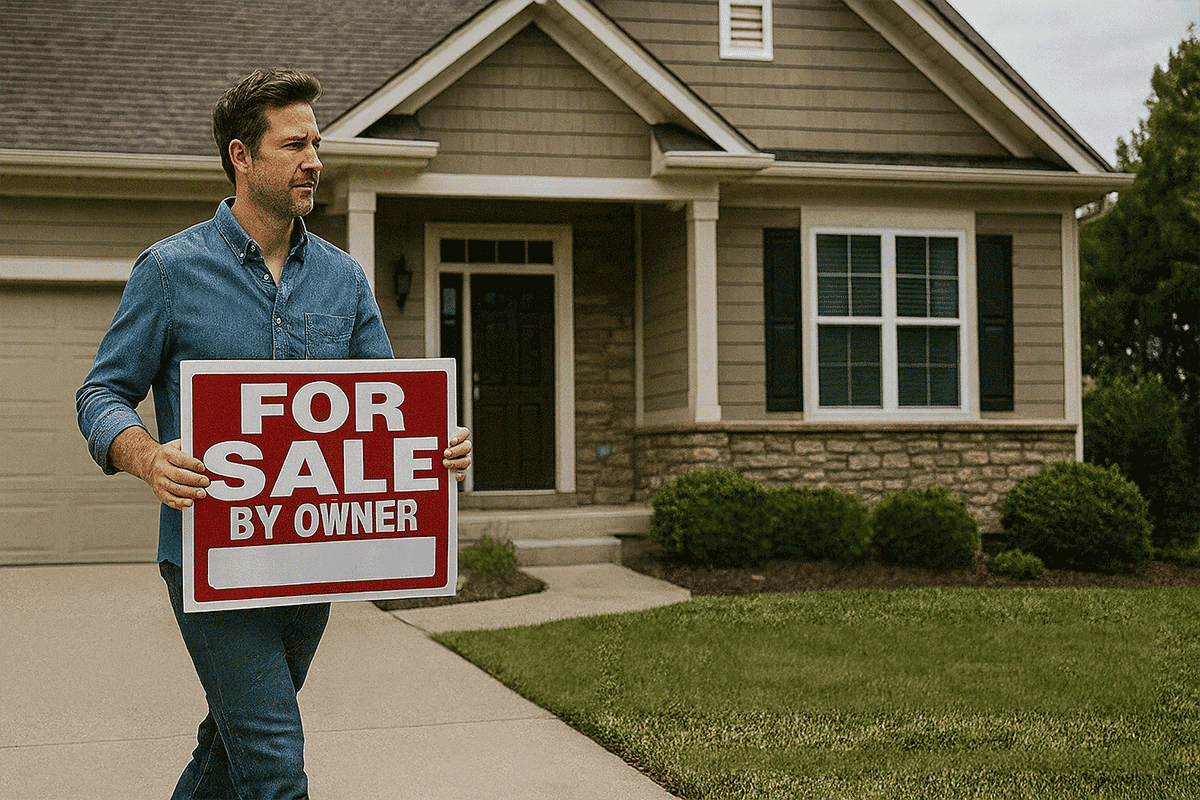
  • Yard Sign: Don’t underestimate the classic “For Sale” sign with your phone number.

What Paperwork Do You Need Without a Realtor?

Selling a home involves legal paperwork, and it’s critical to get it right:

  • Purchase Agreement (Offer to Purchase): Sets the price, terms, and conditions.
  • Property Disclosure Statement: Declares known defects or issues with the home.
  • Title Documents: Proof of ownership.

Closing Documents: Transfer of ownership and settlement of funds.

Most private sellers in Canada hire a real estate lawyer to ensure paperwork is legally sound.

What Are the Advantages of Selling Without an Agent?

Cost Savings: No hefty commission fees eating into your profits.

Direct Negotiations: Talk directly with buyers and make quick decisions.

Control Over Timing: You decide when and how to show your home.

Flexibility in Marketing: Experiment with creative strategies instead of sticking to traditional methods.

What Are the Challenges of Selling FSBO in Canada?

Limited Exposure: Without MLS or an agent’s network, fewer buyers may see your listing.

Time-Consuming: You handle calls, showings, negotiations, and paperwork.

Legal Risks: Mistakes in contracts or disclosures could lead to disputes.

Negotiation Skills Needed: Buyers’ agents may try to push for lower prices.

Step-by-Step Guide: How to Sell Without an Agent

  1. Prepare Your Home – Clean, declutter, and stage it for buyers.
  2. Set Your Price – Use comps, online tools, or an appraiser.
  3. Market Effectively – MLS (flat-fee), social media, and online ads.
  4. Show Your Home – Host open houses or private viewings.
  5. Negotiate Offers – Be ready for counteroffers and conditions.
  6. Hire a Lawyer – Handle contracts, title transfer, and closing.
  7. Close the Sale – Complete paperwork, transfer funds, and hand over the keys.


What About Buyer’s Agents — Do You Still Pay Them?

Yes, often you’ll still need to offer a commission (usually 2–2.5%) to attract buyers’ agents. Otherwise, they may discourage clients from seeing your property. Even with this cost, you still save compared to paying both sides of the commission.


FAQs – Selling Without a Realtor in Canada

  1. Is it harder to sell a house without an agent in Canada?

Yes, it can be more challenging due to limited exposure and legal complexities. However, with proper marketing, a competitive price, and legal assistance, many homeowners successfully sell without a realtor.

  1. Do I need a lawyer to sell privately?

Yes, highly recommended. They’ll draft contracts, ensure compliance with provincial laws, and handle the title transfer. This step is critical to protect both seller and buyer in a FSBO sale.

  1. Can I still list on MLS without a realtor?

Yes, through a flat-fee MLS service. This allows you to access the biggest buyer network in Canada without paying full commission. The service posts your home, but you handle negotiations and buyer communication directly.

  1. How long does it take to sell privately?

The timeline depends on the market and your marketing efforts. Homes priced correctly and well-marketed may sell within weeks, while overpriced or poorly marketed homes could take months. A top realtor might sell faster, but savings are your trade-off.

  1. What if I receive a lowball offer?

Stay calm and counteroffer. Remember, negotiation is part of the process. Be willing to compromise on smaller conditions, but hold firm on your bottom line. Having a lawyer or consultant review offers ensures you’re protected.

  1. How much money can I save by selling without an agent?

On average, Canadians save 4–6% of their sale price. For example, on a $750,000 home in Mississauga, that’s $30,000–$45,000. Even if you pay a buyer’s agent commission and lawyer fees, the savings remain substantial.

  1. Are there risks of selling privately?

Yes. Risks include legal errors, missed disclosures, and fewer buyers. However, with legal help and careful marketing, these risks can be minimized, making FSBO a viable choice for many homeowners.

  1. Do FSBO homes sell for less money?

Not always. Some studies suggest FSBO homes may sell for slightly less, but the savings on commission often offset the difference. Success depends largely on pricing, marketing, and negotiation skills.

  1. Can I sell to a friend or family member without an agent?

Yes, private sales between acquaintances are common. Just be sure to have all agreements in writing and reviewed by a lawyer to avoid disputes later.

  1. What’s the first step if I want to sell without a realtor?

Start by researching your local market and determining a realistic price. Then, prepare your home for sale and decide how you’ll market it (flat-fee MLS, social media, yard signs). Hiring a lawyer early makes the process smoother.


Selling your home without a realtor in Canada can be both rewarding and cost-saving. While it demands effort, marketing savvy, and legal guidance, the potential savings in commission are significant. By understanding the process, preparing thoroughly, and seeking professional legal help, you can confidently sell your house on your own terms.

Disclaimer

This blog is for informational purposes only. The real estate market in Canada is subject to local regulations, and processes may vary by province. Readers are encouraged to conduct independent research and consult with a licensed lawyer or professional before making decisions related to property transactions.
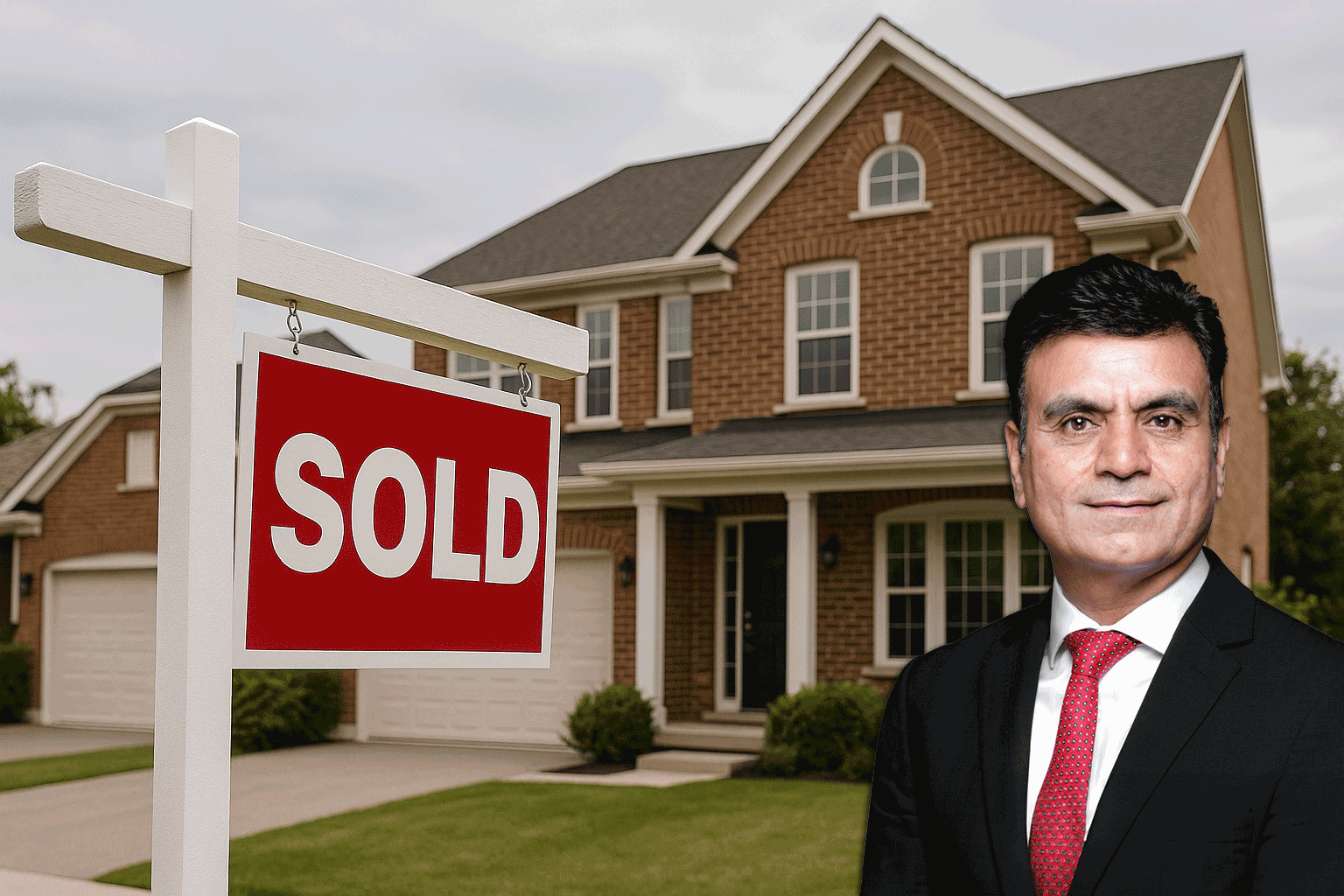

How Can You Find the Top Agent in Brampton for Success?

When it comes to buying or selling a property, few decisions are as important as choosing the right real estate agent. The housing market in Brampton is highly competitive, with diverse neighborhoods, a growing population, and steadily rising property values. In such a landscape, partnering with the top agent in Brampton can be the difference between a seamless, profitable experience and one filled with challenges.

This blog takes you through why finding the right agent matters, what qualities define the top performers, and how you can confidently choose the professional who will represent your best interests.

Why Brampton Is a Hot Market

Brampton has transformed into one of the most desirable real estate markets in the Greater Toronto Area (GTA). With over 650,000 residents and growing, it is home to a diverse population, family-friendly communities, excellent schools, and convenient access to Toronto.

Housing demand in Brampton remains strong due to:

  • Proximity to highways, transit, and Pearson International Airport.

  • New residential developments appealing to first-time buyers.

  • Established luxury neighborhoods attracting high-end buyers.

  • Affordable alternatives compared to downtown Toronto.

In such a dynamic market, working with the top agent in Brampton ensures you have the insights, network, and negotiation skills needed to succeed.

Why Finding the Top Agent Matters

Whether you’re buying or selling, the agent you choose plays a pivotal role in shaping your outcome:

  • Pricing Strategy: For sellers, a top agent ensures your home is priced competitively to attract buyers while maximizing profit.

  • Market Knowledge: For buyers, the agent helps identify the right neighborhoods and avoids overpriced listings.

  • Negotiation Skills: Top agents know how to negotiate strongly while maintaining professional relationships.

  • Smooth Transactions: From paperwork to legal requirements, they manage the process efficiently.

  • Access to Networks: A strong agent brings trusted connections with inspectors, mortgage brokers, and lawyers.

Qualities of the Top Agent in Brampton

Not all real estate agents are the same. Here are the qualities that define the best in Brampton:

  1. Local Expertise – Deep knowledge of Brampton’s neighborhoods, school districts, and market trends.

  2. Proven Track Record – Demonstrated history of successful sales and happy clients.

  3. Strong Online Presence – Active marketing on MLS, social media, and digital platforms.

  4. Negotiation Skills – Ability to secure the best price for buyers and sellers.

  5. Transparency – Honest communication about pricing, timelines, and expectations.

  6. Client-First Approach – Putting your needs before their commission.

Steps to Find the Top Agent in Brampton

1. Research Online

Start by searching for Brampton real estate agents online. Look at websites, Google reviews, and professional profiles. Pay attention to awards, years of experience, and client testimonials.

2. Ask for Referrals

Friends, family, and colleagues are valuable sources. If someone had a positive experience with an agent, that recommendation is worth exploring.

3. Review Sales History

Examine the agent’s portfolio. Are they experienced in your neighborhood and price range? Do they have consistent sales each year?

4. Interview Multiple Agents

Don’t settle for the first agent you meet. Interview at least three. Ask about their strategies, communication style, and success stories.

5. Check Communication Skills

Responsiveness is crucial. If an agent takes days to respond to your calls, it may signal issues down the road.

6. Verify Licensing

Confirm the agent is licensed with the Real Estate Council of Ontario (RECO). A legitimate top agent will have no issue providing credentials.

How Top Agents Help Sellers in Brampton

For sellers, the top agent ensures your property stands out in a competitive market:

  • Professional Staging: Presenting your home at its best.

  • High-Quality Photography & Virtual Tours: Attracting more buyers online.

  • Marketing Strategy: MLS listings, social media ads, and open houses.

  • Pricing Expertise: Balancing market trends with maximizing return.

  • Offer Management: Handling multiple offers and negotiating the best terms.

How Top Agents Help Buyers in Brampton

For buyers, working with the top agent in Brampton offers:

  • Neighborhood Guidance: Matching lifestyle needs with the right community.

  • Early Access to Listings: Often seeing homes before they hit the public market.

  • Realistic Budgeting: Helping align your budget with market conditions.

  • Negotiation Support: Avoiding overpaying in competitive situations.

  • Smooth Closing: Coordinating inspections, financing, and legal paperwork.

Red Flags to Avoid

Not every agent claiming to be the “top” will meet your expectations. Watch out for:

  • Poor or no online presence.

  • Lack of recent sales or references.

  • Overpromising results without evidence.

  • Unresponsiveness to questions.

  • High-pressure tactics to sign quickly.

The Buyer’s Action Plan

If you’re ready to buy in Brampton, here’s your step-by-step plan:

  1. Determine Your Budget – Get pre-approved for a mortgage.

  2. Research Agents – Shortlist candidates based on reviews and experience.

  3. Conduct Interviews – Ask questions about their strategy for buyers.

  4. Review Recent Transactions – Check if they’ve helped clients like you.

  5. Commit to the Right Fit – Choose the agent who aligns with your goals.

FAQs

1. How do I know if I’ve found the top agent in Brampton?

A top agent has a strong reputation, years of experience, and a proven sales record in Brampton. They listen to your needs, communicate openly, and demonstrate deep knowledge of the local housing market and negotiation strategies.

2. Is it better to choose a Brampton agent who specializes in buyers or sellers?

It depends on your goal. If you’re selling, a listing specialist with strong marketing skills is ideal. If you’re buying, choose an agent who knows Brampton’s neighborhoods well. Some top agents are experienced in both areas.

3. Do top agents in Brampton charge higher commissions?

Not always. While commissions are negotiable, top agents often deliver more value through faster sales and higher offers. The expertise, exposure, and negotiation skills they provide often outweigh any difference in commission fees.

4. Can I work with multiple agents at the same time?

Technically, yes, but it’s not recommended. Most buyers and sellers sign agreements committing to one agent. Working exclusively builds trust and ensures your agent dedicates their full effort to meeting your needs.

5. How long does it take to sell a home in Brampton with a top agent?

On average, well-priced homes in Brampton sell within a few weeks, especially with professional staging and strong marketing. A top agent can often shorten the timeline by attracting more qualified buyers.

6. What’s the difference between an average agent and a top agent in Brampton?

An average agent may simply list your home or show you properties. A top agent goes further — providing market insights, pricing strategies, strong marketing, and skilled negotiations that maximize your value while minimizing your stress.

7. Can a top agent help me if I’m relocating to Brampton?

Yes. Relocation clients benefit from an agent who can recommend schools, neighborhoods, and local amenities. Top agents often provide virtual tours and market insights for clients moving from outside the GTA.

8. How do I verify an agent’s reputation?

Check online reviews, request references from past clients, and verify their license with RECO. Awards, sales volume, and testimonials are also reliable indicators of whether they’re truly among the top agents in Brampton.

9. Is it worth paying for staging recommended by a top agent?

Absolutely. Staged homes in Brampton often sell faster and for higher prices. Top agents usually partner with staging professionals who know how to highlight your home’s strengths and appeal to the widest pool of buyers.

10. Should I hire a newer agent if they’re recommended by someone?

A newer agent can still be effective if they work under a strong team or mentor. However, if you want the confidence of proven results, choosing a seasoned top agent in Brampton is often the safer investment.

In Brampton’s competitive housing market, finding the top agent is crucial to achieving your goals, whether buying your dream home or selling for maximum value. The right professional combines experience, communication, local expertise, and client-first service.

Take your time to research, ask questions, and trust your instincts. By choosing wisely, you set yourself up for a smoother process and a stronger outcome.

Disclaimer

This blog is intended for informational purposes only. While every effort has been made to provide accurate and helpful guidance, real estate market conditions in Brampton may vary. Readers are encouraged to conduct independent research and consult a licensed professional before making decisions.

Buying a Convenience Store and Gas Station – Complete Guide for Investors

Owning a convenience store and gas station is one of the most popular small-business investments in North America. With steady customer demand, recurring revenue streams, and the ability to diversify services, this business model attracts first-time buyers and seasoned investors alike.

But while it can be lucrative, purchasing a gas station and convenience store requires due diligence, financial planning, and a clear understanding of industry data. In this guide, we’ll explore why investing in a gas station convenience store is profitable, key financial stats, what to look for as a buyer, and how to close a successful deal.

Why Buy a Convenience Store and Gas Station?

  • Steady Consumer Demand – Fuel is essential, and convenience items (snacks, beverages, tobacco, lottery tickets) generate consistent sales.

  • High Frequency Purchases – Unlike other retail businesses, customers return multiple times per week.

  • Cash Flow Business – Daily sales mean steady cash flow compared to seasonal businesses.

  • Upselling Opportunities – Buyers can add car washes, fast food franchises, or delivery services for extra revenue.

Industry Statistics – Why the Market Matters

According to IBISWorld and NACS (National Association of Convenience Stores):

  • The U.S. convenience store industry generated $906 billion in total sales in 2022.

  • More than 148,000 convenience stores operate nationwide, with gas stations making up about 80% of the total.

  • Fuel sales account for ~60% of total sales revenue, while in-store items (snacks, coffee, alcohol, lottery) make up the rest.

  • Average convenience store sales per year: $2–$4 million (depending on fuel volume and location).

  • In Canada, convenience and gas station stores represent over $30 billion in revenue annually.

Key Advantages for Buyers

1. Recession-Resistant Business

Fuel demand remains steady even during economic downturns. People need gas to commute, and convenience stores thrive on small, daily purchases.

2. Multiple Revenue Streams

  • Fuel sales

  • In-store products

  • Lottery and tobacco

  • ATM and bill payment services

  • Food service, coffee, and quick meals

3. Real Estate Potential

Many gas stations include property ownership. Real estate value alone often appreciates, making it a dual investment.

What Buyers Should Consider

Before you buy a convenience store and gas station, evaluate these critical factors:

1. Location

  • High-traffic intersections or highways are ideal.

  • Proximity to residential areas ensures recurring customers.

2. Fuel Volume

  • Stations selling >80,000 gallons/month generate significant margins.

  • Understand supply contracts with fuel distributors.

3. Inside Sales

  • Profits on in-store items often exceed those from fuel sales.

  • High-margin products: coffee, snacks, and prepared foods.

4. Environmental Concerns

  • Ensure tanks are up to regulatory standards.

  • Conduct an environmental site assessment (ESA) to avoid liability.

5. Financial Records

  • Review 2–3 years of sales data.

  • Check profitability by separating fuel vs. convenience store earnings.

Financial Snapshot for Buyers

  • Gross Profit Margins:

    • Fuel: 8–12 cents per gallon (small margin, but high volume).

    • Convenience items: 25–35% average margins.

  • Business Value Multiples:

    • Typically valued at 2.5x–3.5x EBITDA (Earnings Before Interest, Taxes, Depreciation, Amortization).

  • Down Payment:

    • SBA loans (U.S.) require 10–20% down payment.

  • Return on Investment (ROI):

    • Average ROI for a well-run gas station: 15–25% annually.

Steps to Buy a Convenience Store and Gas Station

1. Research the Market

Analyze locations with high traffic, low competition, and strong community demand.

2. Secure Financing

Options include SBA loans (U.S.), bank loans, or seller financing.

3. Conduct Due Diligence

Review:

  • Sales and profit history

  • Fuel supplier agreements

  • Employee costs

  • Property lease terms

4. Hire Professionals

Engage a business broker, accountant, and lawyer with gas station transaction experience.

5. Negotiate and Close

Finalize purchase price, transfer licenses, and establish supplier relationships.

Opportunities to Increase Revenue After Purchase

  • Add a car wash service.

  • Partner with food brands (Subway, Tim Hortons, Dunkin’).

  • Introduce delivery and mobile payment options.

  • Expand product lines to include fresh food and groceries.

  • Invest in EV charging stations to prepare for the electric vehicle market.

Risks and Challenges for Buyers

  • Thin Fuel Margins – Most profits come from in-store sales, not fuel.

  • Rising Competition – Competing stations and wholesale clubs (Costco, Walmart).

  • Regulatory Compliance – Fuel storage, alcohol/tobacco sales, and employment laws.

  • Staffing Issues – Recruiting and retaining employees in a 24/7 business.

FAQs About Buying a Convenience Store and Gas Station

1. Is buying a gas station profitable?

Yes. A well-located gas station with high fuel volume and strong convenience store sales can generate consistent profits. While fuel margins are low, inside sales provide strong profits, and property ownership adds long-term investment value.

2. How much money do I need to buy a convenience store and gas station?

The cost varies widely. Smaller rural stations may sell for $500,000–$1 million, while urban stations with property can exceed $5 million. Buyers typically need 10–20% of the purchase price as a down payment for financing.

3. What are the biggest risks in owning a gas station?

Key risks include environmental liabilities (underground tanks), fluctuating fuel prices, and heavy competition. Buyers should invest in due diligence, purchase insurance, and diversify income with strong convenience store sales to reduce risks.

4. How do convenience stores make the most money?

Convenience stores profit most from high-margin items like coffee, snacks, prepared foods, and beverages. While fuel draws customers in, most of the profits come from in-store sales, which often provide margins three times higher than fuel.

5. Should I buy a branded or independent gas station?

Branded stations (Shell, Exxon, Esso) offer name recognition and strong supply chains but come with strict contracts. Independent stations allow more flexibility in pricing and sourcing but require stronger marketing to attract customers.

6. How do I increase sales after buying a gas station?

Add complementary services like car washes, food franchises, or EV charging. Improve store layout, run loyalty programs, and market promotions on fuel discounts tied to in-store purchases to boost revenue and attract repeat customers.

7. What is the ROI on buying a gas station convenience store?

ROI depends on location, sales volume, and management. On average, owners see 15–25% annual returns. The business’s dual-income structure (fuel + retail sales) makes it an attractive investment for long-term profitability.

8. How important are environmental checks before purchase?

Critical. An environmental site assessment (ESA) ensures underground tanks are safe and compliant. Failing to check can result in liability costs in the hundreds of thousands, which may fall on the new owner if not addressed before purchase.

9. Can I run the business without prior experience?

Yes, many first-time business owners succeed. However, training in store management, fuel systems, and inventory is vital. Hiring experienced staff or working with the seller during a transition period can smooth the learning curve.

10. What future trends should buyers consider?

Electric vehicle (EV) charging, digital payment systems, and expanded fresh food options are shaping the future. Buyers who adapt quickly—such as adding EV chargers and modernizing their convenience offerings—will have a competitive edge.

Conclusion

Buying a convenience store and gas station can be one of the most profitable investments in today’s market. With steady demand for fuel and everyday essentials, these businesses offer reliable cash flow, strong ROI, and long-term real estate value.

For buyers, success depends on location, due diligence, and maximizing in-store sales. By understanding industry data, managing risks, and adding modern services, investors can transform a gas station into a thriving, multi-revenue business.

The information provided in this blog is for general educational purposes only. While we have included industry data and financial insights, figures may vary depending on location, market conditions, and individual business performance. We do not claim exact accuracy of all data points. Readers should conduct independent research and consult qualified professionals before making investment or purchase decisions.

How to Sell in Mississauga – Complete Home Selling Guide

Mississauga is one of the most dynamic and diverse cities in the Greater Toronto Area (GTA). With its strong job market, excellent schools, vibrant communities, and close proximity to Toronto, it’s no surprise that Mississauga is a highly desirable location for homebuyers.

If you’re planning to sell your home in Mississauga, the process can be both exciting and overwhelming. From pricing your property correctly to navigating legal paperwork, there are several important steps to ensure a successful sale. In this guide, we’ll cover everything you need to know about how to sell in Mississauga, so you can maximize your return and avoid common pitfalls.


Why Mississauga Is a Great Place to Sell

Mississauga has consistently been one of the hottest real estate markets in Ontario. Several factors contribute to its strong housing demand:

  • Proximity to Toronto – Just west of Toronto, Mississauga offers more affordable housing with convenient access to the city.

  • Diverse Housing Options – From condos and townhouses to luxury homes, the market appeals to a wide range of buyers.

  • Growing Population – With over 800,000 residents and continuing growth, demand for housing remains high.

  • Strong Economy – Major employers and industries are located in the city, attracting professionals and families.

  • Transportation Infrastructure – GO Transit, major highways (401, 403, QEW), and Pearson International Airport make commuting easy.


Steps to Successfully Sell Your Home in Mississauga

1. Prepare Your Home

First impressions matter. Before listing your home, make it appealing to buyers:

  • Declutter and Deep Clean – A tidy home looks bigger and more inviting.

  • Minor Repairs – Fix leaky faucets, repaint walls, and replace outdated fixtures.

  • Curb Appeal – Trim hedges, mow the lawn, and add a fresh coat of paint to your front door.

  • Staging – Professionally staged homes sell faster and for higher prices.


2. Price It Right

Pricing your home correctly is crucial. Overpricing can drive buyers away, while underpricing leaves money on the table. Use these strategies:

  • Comparative Market Analysis (CMA) – Look at recent sales in your neighbourhood.

  • Evaluate Market Trends – Consider whether the market is favouring buyers or sellers.

  • Professional Appraisal – A licensed appraiser can provide an accurate valuation.


3. Market Your Property

To reach serious buyers, you need strong marketing:

  • Professional Photography – High-quality photos attract more attention online.

  • Virtual Tours and Videos – Showcase your home digitally for remote buyers.

  • MLS Listings – Ensure your property is listed on the Multiple Listing Service.

  • Social Media & Online Ads – Use platforms like Facebook, Instagram, and Google Ads for added exposure.


4. Showings and Open Houses

Be flexible with showings to accommodate buyers’ schedules. Hosting an open house can also attract multiple potential buyers at once. Keep your home clean and depersonalized so buyers can imagine themselves living there.


5. Negotiate Offers

When offers start coming in:

  • Review Terms Carefully – Look beyond the price; consider conditions, closing dates, and buyer financing.

  • Multiple Offers – If you receive multiple offers, weigh your options carefully. Sometimes, the highest bid isn’t the best if it comes with complicated conditions.


6. Legal and Closing Steps

Selling a home involves legal paperwork. In Ontario, you must work with a real estate lawyer to:

  • Draft and review agreements

  • Ensure compliance with Ontario real estate law

  • Transfer ownership at closing

  • Handle financial disbursements


Pros of Selling in Mississauga

  • High demand and diverse buyer pool

  • Strong property appreciation over the years

  • Multiple housing types to attract different markets

  • Proximity to Toronto increases desirability

Challenges in Selling

  • Competitive market with many listings

  • Rising interest rates may affect affordability

  • High buyer expectations for upgrades and finishes

  • Legal complexities requiring professional guidance

Tips to Maximize Your Sale

  1. Invest in professional photography and staging.

  2. Price competitively using local data.

  3. Be flexible with showing schedules.

  4. Market aggressively online and offline.

  5. Always consult with a real estate lawyer before signing agreements.


FAQs – How to Sell in Mississauga

1. What is the best time to sell a home in Mississauga?

Spring and early summer are generally the busiest times in the Mississauga real estate market. More buyers are active, properties show better in warm weather, and competition drives higher offers. However, homes can sell successfully year-round with the right strategy.

2. Do I need a real estate agent to sell in Mississauga?

While it’s possible to sell your home privately (For Sale by Owner), most sellers in Mississauga use licensed real estate agents for their marketing reach, negotiation expertise, and industry knowledge. Agents often secure better prices that outweigh commission fees.

3. How do I determine the right price for my home?

Pricing should be based on recent comparable sales in your neighbourhood, current market trends, and the unique features of your property. Many sellers rely on a realtor’s market analysis or an independent appraisal to ensure accurate pricing.

4. What costs should I expect when selling my house?

Typical costs include legal fees, mortgage discharge fees (if applicable), home repairs or upgrades, and real estate commissions if you hire an agent. While these add up, they’re usually outweighed by the profits from a well-priced sale.

5. Can I sell my home in Mississauga without paying commission?

Yes. By choosing For Sale by Owner (FSBO) or flat-fee MLS listing services, you can avoid full commission fees. However, this means taking on marketing, negotiation, and legal responsibilities yourself, which can be challenging without professional support.

6. How long does it take to sell a home in Mississauga?

The average home in Mississauga can sell within 20–45 days, depending on market conditions, location, and pricing. Well-staged and competitively priced homes often sell faster, especially in high-demand neighbourhoods close to schools and transit.

7. Should I renovate before selling?

Minor improvements like painting, replacing outdated fixtures, and landscaping can improve your home’s appeal. Large renovations, however, don’t always guarantee higher returns. Focus on cost-effective updates that enhance first impressions rather than full-scale remodels.

8. What role does a lawyer play in selling my home?

A lawyer ensures your transaction is legally sound. They prepare the deed, review contracts, manage closing funds, and confirm there are no liens or claims on the property. In Ontario, having a real estate lawyer is mandatory for closing.

9. Are bidding wars common in Mississauga?

Yes. In high-demand neighbourhoods, bidding wars are common, especially for detached homes and townhouses. Sellers may receive multiple offers above asking price, particularly in a seller’s market. Strategic pricing and marketing increase the chances of competitive offers.

10. What if my home doesn’t sell quickly?

If your home isn’t selling, revisit your strategy. Review your pricing, improve your marketing, and consider minor upgrades. Sometimes relisting with fresh photos or adjusting the price can attract new interest and speed up the process.


Conclusion

Selling a home in Mississauga can be a rewarding experience, but it requires preparation, market knowledge, and the right approach. From preparing your property and setting the right price to handling negotiations and closing paperwork, every step matters.

Whether you choose to work with a real estate agent or sell independently, the key to success is understanding the local market and presenting your home at its best. With demand in Mississauga remaining strong, sellers have an excellent opportunity to achieve a profitable sale.

How to Sell a House Without Paying Commission – Complete Guide

Selling a house is a major financial transaction, and one of the biggest expenses homeowners face in the process is real estate agent commission fees. Traditionally, agents charge between 4%–6% of the final sale price, which can amount to thousands of dollars. For example, selling a $500,000 home could cost you $25,000–$30,000 in commissions.

The good news? You can sell your house without paying commission and keep more of your equity. This guide explores the best ways to sell your home independently, what to expect, and how to maximize your chances of success.

Understanding Commission Fees

Commission is typically split between the seller’s agent and the buyer’s agent. Each takes a portion of the final sale price as compensation for marketing, negotiating, and managing the transaction. While this can be beneficial for busy homeowners, it’s not mandatory. Many people are now choosing alternatives to avoid hefty fees.

Why Consider Selling Without Commission?

  • Save Money: Eliminating commission means keeping thousands more from your sale.

  • More Control: You manage pricing, marketing, and negotiations directly.

  • Flexible Pricing: Without agent fees, you can price more competitively.

  • Direct Communication: You deal directly with buyers, avoiding middlemen.

Ways to Sell a House Without Paying Commission

1. For Sale by Owner (FSBO)

Selling your home yourself is the most common way to avoid commission. You handle everything, from setting the price to negotiating offers and completing paperwork. While it requires effort, many homeowners successfully close FSBO deals.


2. Flat-Fee MLS Services

An MLS (Multiple Listing Service) is a database agents use to share property listings. With flat-fee MLS services, you pay a one-time fee (usually $300–$500) to get your home listed, reaching thousands of buyers without paying full commission.


3. Selling to Cash Buyers

Investors and cash buyers purchase homes quickly, often as-is, with no commission involved. While offers may be below market value, you save time and money on repairs, staging, and agent fees.


4. Online Real Estate Platforms

Websites like Zillow, Craigslist, and Facebook Marketplace let you advertise your property directly to buyers for free or low cost. These platforms provide massive visibility without involving agents.


5. Selling to Friends or Family

If you already have a buyer in mind, such as a relative or friend, you can complete the sale privately. This eliminates commissions altogether, though you should still hire a lawyer to handle contracts.


Steps to Successfully Sell Your Home Without Paying Commission

Step 1: Price It Right

Research comparable homes in your area. Look at recent sales, active listings, and market trends. Overpricing will scare buyers away, while underpricing leaves money on the table. Tools like Zillow’s Zestimate or Redfin can help.


Step 2: Prepare Your Home

  • Declutter and Clean – Make your home inviting.

  • Minor Repairs – Fix leaky faucets, paint walls, and replace broken fixtures.

  • Staging – Arrange furniture to highlight space and functionality.

A well-presented home creates a positive impression, increasing your chances of getting higher offers.


Step 3: Market Your Home

  • Use high-quality photos and videos.

  • Write compelling descriptions highlighting features and location benefits.

  • Share your listing on social media, real estate websites, and community boards.


Step 4: Handle Showings

Be flexible with scheduling and allow buyers to view the property at their convenience. Host open houses if possible.


Step 5: Negotiate Offers

Review offers carefully. Be prepared for counteroffers and buyer requests for inspections or repairs. Negotiation is key to closing successfully.


Step 6: Manage Paperwork

Work with a real estate attorney to handle contracts, disclosures, and closing documents. This ensures legal compliance and protects both parties.


Pros of Selling Without Commission

  • Maximum financial savings

  • Full control over the process

  • Flexibility in negotiations

  • Direct relationships with buyers

Cons of Selling Without Commission

  • Time-consuming for homeowners

  • Requires knowledge of pricing and contracts

  • Marketing reach may be smaller without MLS exposure

  • Risk of legal or financial mistakes if paperwork isn’t handled correctly

Tips to Maximize Success

  1. Hire a professional photographer for your listing.

  2. Be realistic with your pricing.

  3. Stay organized with documents and timelines.

  4. Be ready to negotiate confidently.

  5. Consider paying a small buyer’s agent fee (2–3%) if needed to attract more buyers.


FAQs – How to Sell a House Without Paying Commission

1. Is it realistic to sell a house without an agent?

Yes. Thousands of homeowners successfully sell FSBO each year. With the right preparation, marketing, and legal support, you can sell your house independently and save thousands in commission fees while still achieving market value.


2. What is the biggest challenge of selling FSBO?

The toughest part is marketing and negotiation. Without access to a professional agent’s network, you must work harder to attract buyers. However, online platforms, flat-fee MLS services, and social media help bridge the gap effectively.


3. Do I need a lawyer to sell my house without an agent?

It’s strongly recommended. A real estate attorney ensures contracts, disclosures, and closing paperwork are accurate and legally binding. This minimizes risks, avoids costly mistakes, and gives you peace of mind during the transaction process.


4. Will I get less money selling without an agent?

Not necessarily. Many FSBO sellers achieve competitive prices by pricing strategically and marketing effectively. Since you save thousands in commissions, even a slightly lower offer may result in more net profit compared to agent-assisted sales.


5. Can I still list my home on MLS without an agent?

Yes. Flat-fee MLS services allow homeowners to pay a small upfront fee to have their property listed. This provides broad exposure to buyers’ agents and online platforms without requiring you to commit to paying full commission rates.


6. How do I handle negotiations without an agent?

Stay informed and calm. Research comparable sales, understand your bottom line, and don’t be afraid to counteroffer. Consider hiring a lawyer or consultant to assist if negotiations become complex, ensuring you protect your financial and legal interests.


7. What costs will I still have if I sell without commission?

You may still face closing costs, attorney fees, and possible buyer incentives. However, you avoid the largest expense—agent commission. Depending on your state, expect to pay for title services, transfer taxes, and minor administrative expenses.


8. Is selling to a cash buyer a good idea?

Yes, if you value speed and convenience. Cash buyers often purchase homes as-is, with no commission, repairs, or lengthy processes. The trade-off is that offers are typically lower than market value, but you save on time and fees.


Conclusion

Selling a house without paying commission is entirely possible and increasingly popular. Whether you choose FSBO, flat-fee MLS, online platforms, or cash buyers, you can successfully close a deal while keeping more equity in your pocket.

The key is preparation—price your home correctly, market it effectively, and ensure legal compliance with the help of an attorney. With effort and smart decisions, you can sell your property independently and maximize your financial return.

Want To Buy A Peel Region Home For Your First Time? [2025]

The Canadian real estate market has experienced an unprecedented sell-out in the last two years. Prices have risen to unprecedented levels, bidding wars have turned intense, and many potential first-time homebuyers have been priced out of the market. The winds have started to calm down red-hot selling conditions and create a window for buyers looking to buy their first home. Inflationary environments are characterized by falling home prices due to rising interest rates. This has been particularly true for entry-level properties. Brampton has been more affordable than ever and has the highest rate of return of any urban center in Peel Region. This is great news for buyers, but first-time home buyers have multiple government programs to assist them.

Team Arora says, “Affordability will continue to be our greatest challenge entry GTA” Greater Toronto Area is a very important place. I cannot stress enough how important it is for first-time buyers. The rest of the market will stall if they don’t purchase. As prices have slowed down a lot since February 2022’s peak, I am confident that investors and buyers will gradually re-enter the market.

This guide will help potential homebuyers to reach their first home milestone in Peel Region.

Make the most of the cooling market

Peel Region’s housing market has been difficult. If you have been house hunting over the past few years and had to put off your plans, this is the time to look at the changing landscape. Although interest rates are rising, the drop in home prices is making it easier for first-time buyers to get into markets that were previously hard to access. This is the right time to get involved (or re-engage). Another problem is the very high rents and low vacancy rates. Rents can be very costly and difficult to find. If the price is reasonable, it’s better to buy in this market.

Do the math

To get clear guidance on your financial situation and how to pay your mortgage, speak with a mortgage professional. Even if you have done this in the past few years, it is still a good idea. A plan is just taking one step.

First-time buyers have many options when it comes to down payments. Learn how much you will need to put down for a down Payment on a property. Although 20% is the recommended amount, some experts suggest that buyers put down as low as 5%. (See the table below for more details). .

Price of purchase Minimum downpayment
Below $500,000 5% of your purchase price
From $500,000 to $999.999 5% of the $500,000 first payment + 10% for the $500,001-$999,999 portion
$1 million plus 20% off the purchase price

While it is a major hurdle, covering your down payment is not the end of the story. Talk to a professional about the average cost of a home inspection, closing costs and the cost associated with moving. Make sure to have at least three months of income in savings for emergencies, repairs and property taxes.

View government initiatives

The federal and provincial governments introduced tax rebates and other programs in an effort to ease some of the difficulties faced by first-time buyers. More initiatives are expected this year. Peel Region buyers now have access to the “Affordable Homeownership Program”, a county-specific program for renters with low-to-moderate incomes who want to buy their first home. You can read more about the program here: https://www.peelregion.ca/housing/development/affordable-housing-incentives/

The Government of Canada offers a First-Time Home Buyer Incentive to help first time buyers. The First-Time Home Buyer Incentive, offered by the Government of Canada, provides a 5-10% discount on a home’s price for a down payment. This helps lower mortgage carrying costs and makes owning a home more affordable. You can learn more about this initiative here: https://www.placetocallhome.ca/fthbi/first-time-homebuyer-incentive

Talk to a real estate expert

It’s easy for people to become overwhelmed when they’re trying to buy their first home. That’s why it is important to seek out housing professionals before making major real estate decisions. A professional Realtor(r) will be able give you guidance on the best type of home and recommended neighborhoods to consider. We at Team Arora are always available to answer any questions you might have about real estate, especially if it’s your first time buying or selling.

Get in touch with us today to discuss your real estate goals.


Accounting Firms/CPA Industry – A Complete Guide

The accounting industry is the backbone of financial transparency and compliance across businesses, individuals, and nonprofit organizations. In the United States, accounting firms and Certified Public Accountants (CPAs) not only handle audits and tax filings but also provide critical financial guidance that drives decision-making for organizations of all sizes.

This blog offers a comprehensive look into the Accounting Services industry, exploring its growth, challenges, valuation, and future outlook.

Understanding the Industry

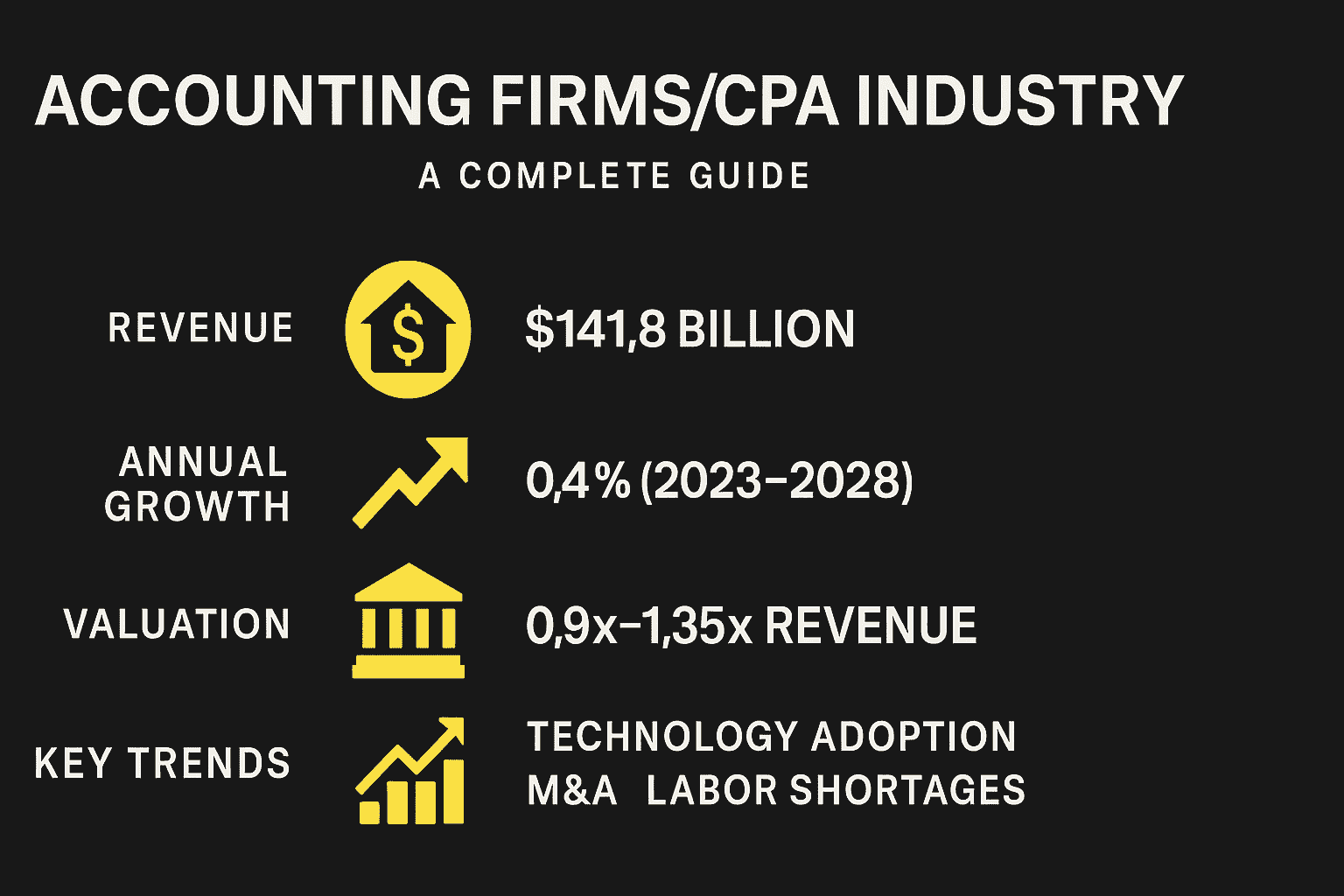
The U.S. accounting industry is large and stable. According to the Business Reference Guide (BRG), there are approximately 95,559 establishments, generating around $141.8 billion in annual revenue. Collectively, firms employ nearly 823,000 workers with wages exceeding $54.2 billion.

These firms specialize in:

  • Financial auditing (36.6%)

  • Corporate tax preparation (26.8%)

  • Individual tax preparation (16.1%)

  • Other advisory services including payroll, financial planning, and consulting (20.5%)

This industry is highly regulated and requires strict compliance with auditing standards, tax laws, and professional ethics.


Industry Performance and Growth

Between 2018 and 2023, the accounting services sector grew by 3.4% annually. Looking ahead, the BRG projects a modest growth rate of 0.4% through 2028. While growth is slower compared to other industries, the accounting sector remains resilient because:

  • Every business and individual is required to file tax returns.

  • Demand for audits and compliance is ongoing.

  • The industry generates recurring annual revenue, making it less sensitive to market downturns.


Valuation and Financial Benchmarks

When it comes to acquisitions and investments, accounting firms are typically valued using multiples of revenue or earnings.

  • Small Firms (< $1M revenue): valued around 0.96x Net Sales

  • Mid-sized Firms ($1–5M): valued between 0.88–0.92x Net Sales

  • Larger Firms (metro areas): valued at 1.0–1.35x annual gross revenue

  • EBITDA multiples: ~ 2.2x

These valuations reflect the recurring, stable revenue streams that accounting firms generate, particularly from tax services and long-term client relationships.


Market Segmentation

The client base for accounting firms is diverse:

  • Finance sector: 21.7%

  • Individuals: 19.5%

  • Other businesses/industrial: 14.3%

  • Retail sector: 11%

  • Manufacturing: 8%

  • Nonprofit organizations: 5.3%

This segmentation highlights the industry’s widespread role in supporting multiple sectors of the economy.


Industry Trends

The industry is undergoing significant transformation, driven by technology, demographics, and market consolidation.

  1. Technology Adoption – Firms are shifting to cloud-based software, automation, and AI tools, reducing reliance on manual accounting. This not only cuts costs but also allows accountants to focus on advisory services.

  2. Mergers and Acquisitions – Larger firms are expanding into wealth management and insurance, while smaller firms are being acquired or consolidated.

  3. Aging Workforce – Many CPAs are nearing retirement, creating a shortage of qualified professionals and driving demand for younger accountants.

  4. Outsourcing – Offshore accounting and outsourced back-office functions are becoming more common, particularly for smaller firms under pressure to keep costs low.

  5. Regulatory Changes – Ongoing tax law updates and regulatory adjustments continue to fuel demand for professional accounting services.


Strengths of the Industry

  • Resilient During Recessions: Even during economic downturns, tax filing and audits remain necessary.

  • Recurring Revenue: Annual tax filing and compliance work create steady income.

  • Cross-Selling Opportunities: Firms can expand into payroll, consulting, and financial advisory.

  • Trusted Client Relationships: CPAs hold a high level of trust with clients, fostering loyalty and repeat business.


Challenges Facing Accounting Firms

  • Competition from Low-Cost Providers: Online tax platforms and software alternatives are pressuring traditional firms.

  • Talent Shortage: Recruiting and retaining skilled CPAs is increasingly difficult.

  • Price Pressure: Smaller firms often cut fees to remain competitive, lowering profitability.

  • Regulatory Uncertainty: Frequent changes in tax laws make planning challenging.


Opportunities for Growth

Despite the challenges, accounting firms can tap into several opportunities:

  • Expand into Wealth Management & Insurance – Bundling accounting with financial planning services.

  • Leverage Technology – Automating basic tasks and focusing on higher-value advisory services.

  • Consolidation – Merging smaller CPA firms to create stronger, more competitive practices.

  • Advisory Services – Helping clients with strategy, compliance, and risk management beyond tax filing.


Financing & Acquisitions

Most acquisitions in this industry are financed with a mix of bank loans and seller financing:

  • 80% bank loans + 20% seller financing are common.

  • SBA loans are widely used, particularly for smaller firms.

  • Larger practices tend to attract conventional financing.

This financing flexibility, combined with stable revenue streams, makes CPA firms attractive acquisition targets.

FAQs About Accounting Firms and the Industry

1. Why are accounting firms considered recession-proof?

Accounting services are driven by compliance requirements rather than market cycles. Regardless of economic conditions, individuals and businesses must file taxes, prepare financial statements, and undergo audits. This recurring demand ensures firms remain busy even during downturns. While profit margins may tighten, revenues tend to stay stable, making the industry more recession-resistant compared to other sectors.

2. How are accounting firms valued for sale?

Valuation usually depends on annual revenue, profitability, and location. Small firms in rural areas might sell for 100% of annual revenue, while well-established metro firms can fetch up to 135% of revenue. EBITDA multiples average around 2.2x. Other factors such as client base, staff expertise, and growth potential also play a major role in determining value.

3. What challenges do small CPA firms face?

Small firms often struggle with staffing shortages, client retention, and fee pressure. Many are forced to lower their prices to compete with large firms or online platforms, which reduces profitability. Additionally, small owners often face time pressure during tax season, making it harder to balance operations and growth.

4. How is technology changing the accounting industry?

Technology is revolutionizing the way firms operate. Cloud accounting platforms, AI-powered bookkeeping tools, and automation are reducing manual data entry and compliance tasks. This allows accountants to focus on advisory services such as financial planning and consulting. Firms that adopt these tools gain efficiency and improve client satisfaction, while those that don’t risk being left behind.

5. What makes accounting firms attractive to buyers?

From an investment perspective, accounting firms are attractive because they:

  • Offer predictable, recurring annual revenue.

  • Provide opportunities to cross-sell financial services.

  • Have long-term client relationships built on trust.

  • Operate in a regulated, stable industry.

These factors make them a low-risk investment compared to industries that are heavily cyclical or dependent on consumer spending.

6. What is the future outlook for the industry?

While growth will be slow (0.4% annually through 2028), the accounting industry will remain steady. Demand for advisory services, mergers and acquisitions, and technology-driven efficiencies will define the future. However, competition from online tax software and staffing shortages may pose challenges. Firms that adapt to these changes will thrive, while others may consolidate or exit.

The Accounting Services industry plays a critical role in financial transparency, compliance, and advisory services. With a strong base of recurring revenue, steady demand, and opportunities for expansion into advisory and financial planning, the industry is well-positioned for long-term resilience.

While growth will be modest, the need for qualified CPAs will remain strong. Firms that embrace technology, expand services, and strategically consolidate will be the ones to succeed in the years ahead.


Citation

Business Brokerage Press. Business Reference Guide: Accounting Firms/CPAs Industry Overview. 2023.

industry_overview Business Reference Guide

All data and statistics in this article are provided for informational purposes only. We are not claiming the exactness of numbers, as industry figures may vary depending on source, location, and market changes. Readers should use this information as a general guide and consult a licensed professional or verified reports for precise details.

Foreclosure of Sale – Everything You Need to Know

The real estate market is full of opportunities, but it can also be unpredictable. One term that often comes up in property transactions—especially when financial difficulties arise—is foreclosure of sale. While the concept might seem intimidating, understanding how foreclosure works, why it happens, and what your rights and options are can help you navigate the process more confidently.

In this comprehensive guide, we’ll explore the meaning of foreclosure of sale, how it works, its implications for homeowners and buyers, and how to handle the situation effectively.

What Is Foreclosure of Sale?

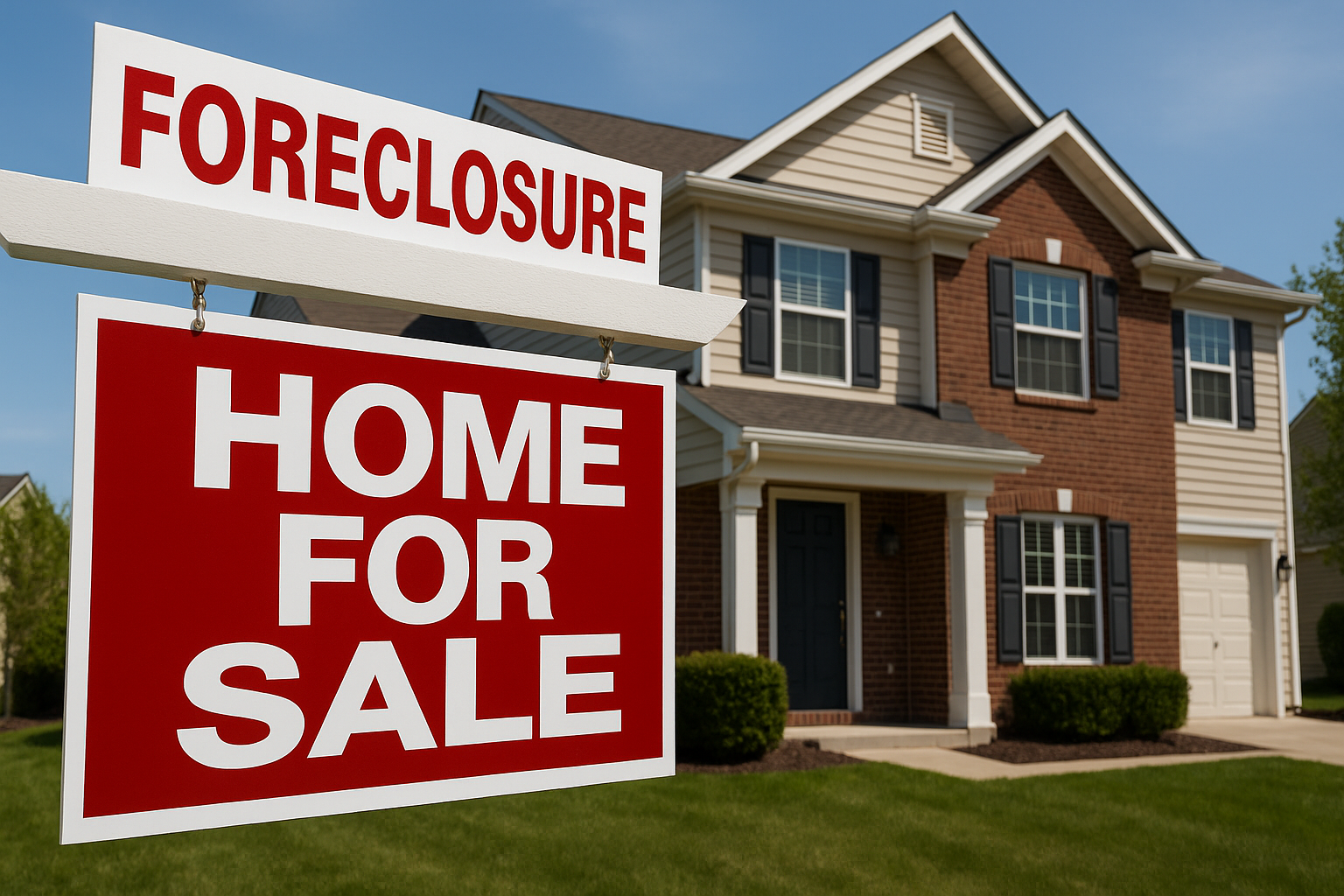
Foreclosure of sale is a legal process where a lender takes possession of a property after the homeowner fails to meet mortgage payment obligations. The property is then sold—often at auction—to recover the outstanding loan amount.

In most cases, foreclosure occurs after several missed payments, and the lender has exhausted all other methods to collect the debt. The foreclosure sale marks the final stage in the process, transferring ownership of the property to the highest bidder or back to the lender if no acceptable bids are received.

Why Foreclosure Happens

Foreclosure is rarely an overnight event. It is typically the result of prolonged financial strain on the homeowner. Common causes include:

  • Job Loss or Reduced Income – Unexpected unemployment or reduced hours can make it hard to keep up with mortgage payments.

  • Medical Emergencies – High medical bills can shift priorities away from mortgage obligations.

  • Rising Interest Rates – For adjustable-rate mortgages, payment amounts can increase significantly, making them unaffordable.

  • Divorce or Separation – Splitting households can impact the ability to meet financial obligations.

  • Unexpected Expenses – Major home repairs or family emergencies can divert funds.

Regardless of the cause, foreclosure is a legal remedy for lenders to recover funds when a mortgage goes unpaid.

Types of Foreclosure Sales

The foreclosure process varies depending on jurisdiction, but there are generally two primary types:

1. Judicial Foreclosure

This process is handled through the court system. The lender files a lawsuit against the borrower, and if the court rules in the lender’s favor, the property is ordered for sale. Judicial foreclosures can take longer because of the legal proceedings involved, but they allow borrowers more time to respond or contest the case.

2. Non-Judicial Foreclosure

In states or provinces that allow it, non-judicial foreclosure does not require court approval. Instead, the lender follows the process outlined in the mortgage agreement or deed of trust. This approach is typically faster but may offer fewer opportunities for the borrower to stop the sale.

The Foreclosure of Sale Process

While exact timelines vary, here’s a general overview of how the foreclosure of sale unfolds:

  1. Missed Payments – The borrower fails to make one or more mortgage payments.

  2. Notice of Default – After several missed payments, the lender issues a notice of default, informing the borrower of their delinquency.

  3. Pre-Foreclosure Period – The borrower may have an opportunity to reinstate the loan by paying overdue amounts plus penalties.

  4. Notice of Sale – If the default is not resolved, the lender issues a notice of sale, setting a date for auction.

  5. Foreclosure Sale – The property is sold at public auction to the highest bidder.

  6. Post-Sale Period – If state law allows, the borrower may have a redemption period to reclaim the property by paying the full amount owed.

Implications for Homeowners

Facing foreclosure can be overwhelming, but understanding the consequences helps in making informed decisions:

  • Loss of Home – The most obvious consequence is losing ownership of your property.

  • Credit Score Impact – A foreclosure can significantly lower your credit score and remain on your credit report for up to seven years.

  • Deficiency Judgment – If the foreclosure sale doesn’t cover the full mortgage balance, the lender may seek a judgment for the remaining amount.

  • Emotional Stress – The process can be mentally and emotionally taxing for homeowners and their families.

Options to Avoid Foreclosure of Sale

Homeowners facing financial difficulties have several potential avenues to avoid foreclosure:

  1. Loan Modification – Renegotiating mortgage terms to make payments more affordable.

  2. Forbearance Agreement – Temporarily pausing or reducing payments while financial issues are resolved.

  3. Repayment Plan – Catching up on overdue payments through an agreed schedule.

  4. Short Sale – Selling the home for less than the remaining mortgage balance with lender approval.

  5. Deed in Lieu of Foreclosure – Voluntarily transferring ownership to the lender to avoid a foreclosure record.

Opportunities for Buyers in Foreclosure Sales

For buyers and investors, foreclosure sales can present opportunities to acquire property at below-market prices. However, these deals often come with risks:

  • As-Is Purchases – Foreclosure properties are usually sold without repairs or warranties.

  • Unpaid Liens – Buyers may be responsible for unpaid property taxes or liens.

  • Limited Inspections – Access to inspect the property before purchase may be restricted.

Working with a real estate agent who specializes in foreclosures can help mitigate these risks.

How to Participate in a Foreclosure Auction

If you’re interested in buying at a foreclosure sale:

  1. Research Properties – Use public notices, online databases, and courthouse records to identify upcoming sales.

  2. Understand the Rules – Each jurisdiction has specific requirements for bidding and payment.

  3. Arrange Financing – Many auctions require full payment in cash or certified funds at the time of sale.

  4. Set a Budget – Determine your maximum bid to avoid overpaying.

  5. Attend the Auction – Be prepared to act quickly and decisively.

Legal Considerations in Foreclosure Sales

Foreclosure laws vary widely by jurisdiction, so it’s essential to consult a real estate lawyer or foreclosure specialist. Key legal aspects include:

  • Right of Redemption – In some areas, homeowners can reclaim their property after the sale by paying the debt in full.

  • Deficiency Laws – Regulations may limit a lender’s ability to collect any remaining debt after the sale.

  • Notice Requirements – Lenders must follow strict notice and timing rules before a foreclosure sale.

FAQs on Foreclosure of Sale

1. How long does the foreclosure process take?

The timeline can range from a few months to over a year, depending on the type of foreclosure and local laws. Judicial foreclosures generally take longer due to court involvement, while non-judicial foreclosures can move more quickly. Borrowers often have a pre-foreclosure period in which they can negotiate or make up missed payments.

2. Can I stop a foreclosure once the sale is scheduled?

Yes, in many cases, foreclosure can still be stopped before the sale date. Options include reinstating the mortgage, negotiating a loan modification, filing for bankruptcy (which temporarily halts foreclosure), or reaching a settlement with the lender. The earlier you act, the more options you have.

3. Will a foreclosure sale erase all my debts?

Not necessarily. While the sale may satisfy the mortgage debt, you could still owe a deficiency balance if the sale price is less than the total debt. Some jurisdictions prohibit deficiency judgments for certain loans, while others allow lenders to pursue the difference

4. Is buying a foreclosure a good investment?

It can be, but due diligence is crucial. Foreclosed properties often sell at a discount, but they may require extensive repairs or come with legal complications. Working with professionals—such as real estate agents, inspectors, and attorneys—can help ensure a sound investment.

5. What happens if no one bids at the foreclosure auction?

If no acceptable bids are received, the property typically reverts to the lender as Real Estate Owned (REO) property. The lender may then list it for sale through traditional real estate channels.

6. How does foreclosure affect my ability to buy another home?

A foreclosure can impact your credit score significantly, making it harder to qualify for a new mortgage. Most lenders require a waiting period—typically between two to seven years—before approving a new loan, depending on the loan type and borrower’s credit recovery.

Conclusion

Foreclosure of sale is a complex and often stressful process for homeowners, but it’s also a mechanism that ensures lenders can recover unpaid debts. For buyers and investors, it can represent an opportunity—if approached with caution and preparation.

Whether you’re facing foreclosure or considering buying a foreclosed property, knowledge is your best tool. Understanding the process, knowing your rights, and seeking professional guidance can help you navigate this challenging area of real estate with confidence.

Top Realtors in Brampton – Your Complete Real Estate Guide [2025]

Buying or selling a home is one of the most significant financial and emotional decisions you will make in your lifetime. In a competitive housing market like Brampton, the process can be overwhelming without the right guidance. That’s where working with the top realtors in Brampton becomes essential. These professionals not only help you find the perfect property or buyer but also ensure a seamless, efficient, and profitable transaction.

In this comprehensive guide, we will explore why Brampton is a thriving real estate hub, the qualities that define the best real estate agents, how to choose the right one for your needs, and what to expect from the buying or selling process in this fast-paced market.

Why Brampton’s Real Estate Market Is Thriving

Brampton, one of the most dynamic cities in Ontario, has experienced remarkable growth over the past decade. Its appeal lies in its cultural diversity, family-friendly communities, strong economy, and strategic location within the Greater Toronto Area (GTA). The city’s proximity to Toronto, coupled with more affordable housing options compared to the downtown core, has made it a prime destination for homebuyers and investors alike.

According to TRREB Market Watch, Brampton continues to see steady increases in property values year-over-year. This growth is driven by factors such as:

  • An expanding job market

  • Excellent transportation links, including GO Transit and major highways

  • High-quality education facilities

  • A variety of housing options, from modern condos to luxury estates

For both first-time buyers and seasoned investors, Brampton offers opportunities that are hard to ignore.

The Role of a Realtor in Brampton’s Competitive Market

A realtor is more than just someone who lists properties — they are your advocate, strategist, and negotiator throughout the transaction. In Brampton’s competitive market, top realtors offer:

  • Market Analysis – Understanding pricing trends and helping clients set realistic goals.

  • Professional Networking – Connections with mortgage brokers, inspectors, lawyers, and contractors.

  • Marketing Expertise – Creating compelling listings, professional photography, and targeted advertising.

  • Negotiation Skills – Securing the best deal for both buyers and sellers.

  • Local Knowledge – Insights into the best neighbourhoods, school districts, and upcoming developments.

Working with a top realtor ensures you have someone in your corner who understands how to navigate bidding wars, conditional offers, and changing market conditions.

Qualities of the Top Realtors in Brampton

Not all real estate agents are created equal. The top realtors in Brampton share a set of qualities that set them apart:

  1. Extensive Local Knowledge – They know Brampton’s communities inside and out, from family-friendly suburbs to upscale enclaves.

  2. Proven Track Record – High sales volume and consistent positive feedback from clients.

  3. Transparency and Integrity – A trustworthy realtor will put your needs above their commission.

  4. Adaptability – Ability to pivot strategies based on market shifts or client circumstances.

  5. Communication Skills – Prompt updates, clear explanations, and accessibility when you need answers.

A great realtor will not just sell you a home — they will help you make an informed decision that fits your lifestyle and long-term goals.

Popular Neighbourhoods in Brampton

Choosing the right neighbourhood is just as important as finding the right home. Here are some of Brampton’s most sought-after areas:

  • Downtown Brampton – Offers a mix of historic charm and modern conveniences, perfect for those who value walkability.

  • Mount Pleasant – Known for its family-oriented atmosphere, green spaces, and access to schools.

  • Castlemore – An upscale area featuring luxury homes and quiet streets.

  • Bram West – A rapidly developing community with modern housing and proximity to major highways.

Each neighbourhood offers unique benefits, and a skilled realtor will help match you with the community that best fits your needs.

How to Choose the Best Realtor in Brampton

Selecting the right realtor involves more than just picking someone from a search result. Follow these steps to ensure you find the best match:

  • Research Their Experience – Look for agents who have successfully closed multiple transactions in your preferred neighbourhoods.

  • Check Reviews and Testimonials – Platforms like RateMyAgent provide real client feedback.

  • Request References – Speaking directly with past clients can give you insight into the agent’s professionalism and effectiveness.

  • Evaluate Their Marketing Strategies – Ask how they plan to market your property or find your ideal home.

  • Verify Licensing – Ensure they are registered with the Real Estate Council of Ontario (RECO).

The Home Buying Process in Brampton

Working with a top realtor makes the home buying journey smoother and less stressful. Here’s a breakdown of the process:

  1. Initial Consultation – Discuss your needs, budget, and preferred locations.

  2. Mortgage Pre-Approval – Secure financing to understand your budget range.

  3. Property Search – Your realtor will present options that fit your criteria.

  4. Viewings and Open Houses – Visit shortlisted properties and assess their potential.

  5. Making an Offer – Your realtor will help you craft a competitive bid.

  6. Closing the Deal – Finalize legal documents, inspections, and financing.

The Home Selling Process in Brampton

Selling a property involves careful planning and execution. Top realtors guide you through:

  1. Property Evaluation – Determining a fair and competitive listing price.

  2. Home Staging – Presenting your property in the best possible light.

  3. Professional Marketing – Online listings, high-quality images, and targeted advertising.

  4. Showings and Open Houses – Attracting qualified buyers.

  5. Offer Negotiations – Securing the best price and terms.

  6. Closing – Finalizing the sale and transferring ownership.

FAQs – Brampton Real Estate

1. Why should I work with a top realtor instead of selling my home myself?

While selling on your own may seem like a way to save on commission, it often leads to lower sale prices and longer time on the market. Top realtors bring market expertise, professional marketing, and negotiation skills that typically result in higher offers. They also handle legal requirements, paperwork, and buyer screenings, saving you significant time and stress.

2. Are Brampton home prices still rising?

According to data from CREA, Brampton’s housing prices have shown consistent growth over the past few years. While market fluctuations occur, the long-term trend remains upward due to the city’s population growth, infrastructure investments, and desirability as a commuter-friendly community.

3. How do I know if a realtor is right for me?

Look for an agent who listens to your needs, communicates clearly, and demonstrates a deep understanding of Brampton’s market. Ask about their past transactions, marketing approach, and how they plan to achieve your goals. Comfort and trust are essential — you’ll be working closely throughout the process.

4. Can a realtor help me buy an investment property in Brampton?

Absolutely. Many top realtors specialize in investment properties, including rental units, multi-family homes, and commercial spaces. They can advise on high-demand areas, expected rental yields, and long-term value appreciation.

5. Is now a good time to sell my home in Brampton?

Market conditions vary, but Brampton continues to attract a large pool of buyers, including families and investors. Your realtor can provide a Comparative Market Analysis (CMA) to determine the best time to list based on current demand, seasonality, and property type.

Conclusion

Brampton’s real estate market offers incredible opportunities, but navigating it successfully requires expertise. The top realtors in Brampton combine local knowledge, proven experience, and strong client advocacy to help you achieve your property goals — whether you’re buying your dream home, selling for top dollar, or expanding your investment portfolio.

Working with the right realtor is not just a smart move — it’s the key to unlocking the full potential of your real estate journey in one of Ontario’s most exciting cities.

Mississauga Location

268 Derry Rd W Unit 101, Mississauga, ON L5W 0H6