Benefits of Upsizing in a Tough Real Estate Market

In today’s fluctuating real estate market, many potential buyers are hesitant to make big moves. Whether you’re eyeing your first home or looking to upgrade to a more spacious property, upsizing in a challenging market might seem risky. However, it’s possible that this could be the perfect opportunity for you. Upsizing when the market is tough has its advantages, including more affordable options, lower competition, and long-term investment growth. In this blog, we’ll explore the unexpected benefits of upsizing in a tough market and why it might be the right decision for you.

Why Upsize in a Challenging Market?

Upsizing in a tough market may not seem like the most obvious choice. After all, many people are concerned about market volatility and the potential for price drops. However, there are several reasons why upsizing during a downturn can make a lot of sense.

Less Competition, More Negotiation Power

In a competitive market, buyers are often fighting over the same properties, which can lead to bidding wars and higher prices. However, in a tough market, demand tends to be lower. This results in less competition for homes, which can give buyers more leverage during negotiations. With fewer buyers, sellers are often more willing to make concessions, whether it’s lowering the price or offering more favorable terms. This makes upsizing in a slow market a potential win for those looking to upgrade without breaking the bank.

Better Deals on Larger Homes

While the market may be slower, it also means that larger homes, which were once out of reach, could become more affordable. In a booming market, the prices of large, desirable properties rise quickly. But in a down market, these same properties may drop in price, providing a rare chance to upsize into a larger home or move into a better neighborhood at a lower price. For those with a strong financial position, this could be the perfect time to secure the dream home that was previously unattainable.

Lower Interest Rates

During a tough market, central banks often lower interest rates in an effort to stimulate the economy. For homebuyers, this is a golden opportunity to secure a low mortgage rate. Even though you may be upsizing to a larger property, the lower interest rates can help offset the higher price tag. Lower monthly payments could make the larger home more affordable, and if rates stay low, you could save thousands of dollars over the life of your mortgage.

Future Appreciation Potential

Real estate tends to appreciate over time, and buying during a downturn can mean purchasing a property at a lower price. When the market rebounds, your new home could significantly increase in value. Upsizing in a tough market could lead to a great return on investment in the long run. By purchasing now, you may be able to secure a property at a price that wouldn’t have been possible in a seller’s market. As the market stabilizes or recovers, your home’s value could rise, making your investment even more profitable.

Improved Lifestyle and Comfort

One of the main reasons people upsize is the desire for more space. Whether it’s for a growing family, more room for a home office, or simply for a better quality of life, upsizing offers the chance to create a more comfortable living environment. A larger home can accommodate all your needs, from additional bedrooms to more storage space and larger entertaining areas. Moving during a down market can make upgrading your lifestyle more affordable, allowing you to secure the space you need without overpaying.

Stability and Long-Term Security

Real estate is typically a long-term investment, and buying a larger property in a desirable location can provide financial stability. Even if the market takes a dip, owning a home that’s in a sought-after area offers stability. As the market recovers, your home is likely to appreciate in value, and you’ll have peace of mind knowing that your investment is secure. Upsizing in a tough market can be a way to secure your family’s future, providing you with both comfort and financial growth.

How to Make Upsizing Work for You

Upsizing in a tough market is an appealing idea, but it requires careful planning. Here are a few tips to help ensure you make the most of the opportunity:

1. Know Your Budget

Before upsizing, it’s crucial to have a clear understanding of what you can afford. Get pre-approved for a mortgage so you know exactly how much you’re able to borrow. Make sure to account for all costs associated with the move, such as property taxes, insurance, maintenance, and utilities. Understanding your full financial picture will help you avoid stretching your budget too thin.

2. Look for Properties with Long-Term Value

Focus on properties that will appreciate in value over time. Research neighborhoods that are likely to grow or improve, whether through infrastructure projects, new schools, or community development. By upsizing in a location with future growth potential, you’re investing not only in a larger home but also in the area’s future.

3. Take Advantage of Lower Interest Rates

If the market is offering lower interest rates, make sure to lock in a rate that works for your budget. Low interest rates can make the difference between an affordable home and one that’s financially out of reach. Be sure to shop around for the best rates and terms to maximize your savings.

4. Plan for the Long Term

When upsizing, think about your long-term needs. Will this home still work for you in five or ten years? If you’re planning to stay in your new home for a while, it’s important to ensure it meets not only your current needs but also future ones. Think about things like extra bedrooms, space for a growing family, or room for a home office.

Conclusion

In a tough market, upsizing can seem like a risky move. However, for those who are financially prepared and ready to negotiate, it can be a smart decision that pays off in the long run. With fewer buyers in the market, lower interest rates, and the potential for future property value increases, now could be the ideal time to upgrade to a larger home. Whether you’re looking for more space, better amenities, or a stable investment, upsizing in a tough market may be the right step for you.

FAQ

Q. How do I know if it’s the right time for me to upsize?

Timing plays a crucial role in the success of any real estate transaction. If you have a stable income, manageable debt, and long-term financial plans, it might be the perfect time to upsize. Look for low interest rates and affordable properties that fit your budget. If you’re uncertain, consult a real estate agent who can guide you through the process and help assess market conditions.

Q. What are the financial benefits of upsizing during a market downturn?

Upsizing during a tough market often means you can buy a larger home at a lower price. The less competitive market conditions allow you to negotiate better deals, and lower interest rates can help keep monthly payments affordable. If you choose wisely, the home will likely increase in value as the market recovers, leading to a profitable investment in the long run.

Q. Should I consider selling my current property before upsizing?

Selling your current property before upsizing is a good idea if you want to ensure you have enough funds to cover the new home’s purchase. However, in some cases, buying before selling can also be a viable option, especially if you’re able to negotiate favorable terms and the market is relatively balanced. Talk to your real estate agent to figure out the best strategy for your situation.

Q. How does lifestyle planning impact my decision to upsize?

Lifestyle planning is a core element when considering whether to upsize your home. Beyond square footage and amenities, think about how your day-to-day life may evolve in the coming years. Are you planning to grow your family? Will you be working from home more often? Do you foresee hosting guests regularly or needing a larger outdoor space?

Upsizing isn’t just about having more room—it’s about aligning your living environment with your future lifestyle goals. A well-thought-out move today can reduce the need for another relocation in just a few years. Take time to reflect on your long-term priorities, such as proximity to schools, green spaces, or even accessibility as you age. Combining this reflection with your financial preparedness creates a strong foundation for a confident upsizing decision.

Q. What are the hidden costs I should prepare for when upsizing my home?

While many buyers focus on mortgage affordability, the hidden costs of upsizing can take you by surprise if not anticipated. First, larger homes often mean higher utility bills, property taxes, and maintenance expenses. You may also encounter increased home insurance premiums and furnishing costs, especially if you’re moving from a smaller space and need more furniture or appliances.

Additionally, the transaction itself can come with fees—legal, appraisal, inspection, land transfer taxes, and realtor commissions—some of which may differ from your previous experience if you’re moving to a different municipality or province. It’s wise to build a buffer into your budget and consult with your mortgage advisor or real estate agent to map out all potential costs. By preparing early, you reduce financial surprises and ensure a smoother upsizing transition.

Team Arora: Best Brokerage for New Real Estate Agents in Canada

Are you a new real estate agent in Canada looking for the perfect brokerage to launch your career? Look no further than Team Arora, one of the top-rated real estate brokerages in Ontario. With unmatched mentorship, market insight, and a culture that nurtures growth, Team Arora is the launchpad every aspiring agent needs to accelerate their journey from rookie to rockstar.

Table of Contents

  1. Why Choosing the Right Brokerage Matters

  2. What Makes Team Arora Different?

  3. Comprehensive Training for New Agents

  4. Access to Leads and Listing Opportunities

  5. Strong Online Presence and Branding

  6. Top-Tier Marketing and Tech Tools

  7. Team Arora Success Stories

  8. Supportive Culture and Mentorship

  9. How to Join Team Arora

  10. Final Thoughts: The Best Place to Start Your Real Estate Career

Why Choosing the Right Brokerage Matters

Your first few years in real estate are crucial. The right brokerage can:

  • Shape your skill set

  • Determine your access to clients

  • Build your personal brand

  • Influence how fast you earn consistent commissions

Most new agents fail not because of lack of talent but because they don’t get the support and structure they need. This is where Team Arora steps in as a game-changer.

What Makes Team Arora Different?

Team Arora isn’t just a brokerage—it’s a full-service real estate powerhouse built for ambitious agents. With decades of experience in the GTA and beyond, the team has created a results-driven system that empowers new agents to build six-figure careers within their first 1-2 years.

Key differentiators include:

  • One-on-one mentorship

  • Pre-qualified leads

  • In-house marketing team

  • Personalized business plans

  • Reputation as one of the top-performing teams in Mississauga, Brampton, and Toronto

Comprehensive Training for New Agents

Team Arora offers industry-leading onboarding and training designed to bring new agents up to speed fast.

Highlights include:

  • Weekly training sessions on sales, negotiation, and client management

  • Role-playing and script practice

  • Contract and compliance workshops

  • Local market deep-dives

Whether you’re learning how to conduct an open house or convert cold leads, the training is hands-on, practical, and led by top agents who’ve been in your shoes.

SEO Tip: New agents searching “real estate agent training Ontario” or “best brokerage for new realtors GTA” will find Team Arora frequently recommended.

Access to Leads and Listing Opportunities

Let’s be honest—leads are the lifeblood of a new agent’s business. Most brokerages leave you to fend for yourself. Not Team Arora.

You’ll receive:

  • Daily warm buyer and seller leads

  • Access to listings from day one

  • Referral network from long-standing partnerships

  • Open house and co-listing opportunities with senior agents

This gives you the real-world experience and income potential most agents wait months—or years—to access.

Strong Online Presence and Branding

Team Arora dominates online visibility in key markets like Mississauga, Brampton, Oakville, and Toronto.

Here’s what new agents benefit from:

  • Your own branded profile on TeamArora.com

  • Featured in digital ads and SEO-rich blogs

  • Exposure through Team Arora’s Instagram, Facebook, LinkedIn, and YouTube presence

  • Regular newsletter mentions and local campaigns

This not only builds credibility but gets your face in front of serious buyers and sellers fast.

Top-Tier Marketing and Tech Tools

Modern agents need modern tools. Team Arora invests in cutting-edge technology so you can focus on selling, not admin.

Included in your package:

  • CRM and lead nurturing system

  • Branded landing pages and social media creatives

  • Drone video and 3D tour access for listings

  • Automated email campaigns

  • Canva templates and AI-powered copywriting support

You’ll save dozens of hours per month with Team Arora’s in-house marketing team working behind the scenes.

Team Arora Success Stories

Many of Team Arora’s top agents started exactly where you are now—new, nervous, and ambitious.

  • Ravi closed over 24 deals in his first year thanks to weekly mentorship and live lead transfers.

  • Simran, a newcomer to Canada, built a six-figure business in 18 months with the help of the team’s cultural training and referral network.

  • Mark, who transitioned from a corporate job, says, “Joining Team Arora was the best career move I ever made. The training and team culture are unmatched.”

These are not cherry-picked. They’re real people with real results, just like you can achieve.

Supportive Culture and Mentorship

At Team Arora, teamwork is more than a buzzword. The brokerage fosters a positive, collaborative environment where new agents are never alone.

Perks of the culture:

  • Open-door policy with leadership

  • Weekly mastermind groups

  • Monthly social and networking events

  • Peer coaching for performance tracking

  • Mental health and wellness resources

You’ll grow as a professional and a person in this uplifting, success-oriented space.

How to Join Team Arora

Team Arora is currently recruiting motivated, coachable, and committed new agents across Ontario.

Requirements:

  • A valid real estate license (or currently enrolled in Humber Real Estate Program)

  • Strong communication skills

  • Willingness to learn and take feedback

  • A growth mindset

Steps to apply:

  1. Visit teamarora.com/careers

  2. Submit your resume and cover letter

  3. Book a one-on-one consultation with a senior team member

  4. Attend a discovery day or shadow session

It’s that easy. You could be listing properties and closing deals within 30 days.

Final Thoughts: The Best Place to Start Your Real Estate Career

Team Arora isn’t just a good choice—it’s the best brokerage for new agents in Ontario. You’ll get:

  • Expert mentorship

  • Real-time leads

  • Practical training

  • Tech-backed marketing

  • A powerful team brand behind your name

In a competitive industry like real estate, your brokerage defines your future. Don’t gamble with your career. Align with a team that’s proven, powerful, and passionate about helping you succeed.

Ready to start? Apply to Team Arora today and take the first step toward becoming a top-producing real estate agent.

FAQ’s

1. What makes Team Arora an ideal choice for new real estate agents in Canada?

Team Arora stands out as a top-rated real estate brokerage in Ontario, offering unmatched mentorship, market insight, and a culture that nurtures growth. They provide comprehensive training programs, access to pre-qualified leads, and personalized business plans to help new agents accelerate their journey from rookie to rockstar. Their strong online presence and in-house marketing team further support agents in building their personal brand and achieving consistent commissions.


2. How does Team Arora support new agents in building their skills and knowledge?

Team Arora offers industry-leading onboarding and training designed to bring new agents up to speed quickly. This includes weekly training sessions on sales, negotiation, and client management; role-playing and script practice; contract and compliance workshops; and local market deep-dives. The training is hands-on, practical, and led by top agents who have been in the same position, ensuring that new agents gain the necessary skills to succeed in the real estate industry.


3. What kind of marketing and technological support does Team Arora provide to its agents?

Team Arora equips its agents with top-tier marketing and tech tools to enhance their efficiency and client reach. This includes access to an in-house marketing team that assists with personalized branding, social media strategies, and promotional materials. Additionally, agents benefit from advanced CRM systems, lead generation platforms, and other technological resources that streamline their workflow and help them stay ahead in a competitive market.


4. How does Team Arora’s culture contribute to the success of its agents?

The supportive culture at Team Arora plays a significant role in the success of its agents. The brokerage fosters a collaborative environment where agents can share knowledge, experiences, and strategies. Regular team meetings, mentorship programs, and networking events encourage continuous learning and professional development. This nurturing atmosphere helps agents build confidence, stay motivated, and achieve their career goals more effectively.


5. What are the steps to join Team Arora as a new real estate agent?

Joining Team Arora involves a straightforward process designed to integrate new agents seamlessly. Interested individuals can start by contacting the brokerage through their website or attending one of their informational sessions. Prospective agents will then undergo an interview process to assess their goals and compatibility with the team’s culture. Once accepted, new agents receive comprehensive onboarding, including training sessions, mentorship assignments, and access to the necessary tools and resources to kickstart their real estate career successfully.

First-Time Homebuyers in Canada: You Could Save Up to $50,000!

If you’ve been dreaming of owning your first home in Canada but felt priced out of the market, this might be the golden window you’ve been waiting for.

Canada’s housing crisis has been no secret — skyrocketing prices, demand through the roof, and a shortage of homes have made it harder than ever to break into the market. But here’s the game-changing update: the Government of Canada is stepping in with a bold move that could make homeownership more attainable — especially for first-time buyers.

🚨 GST ELIMINATED for First-Time Homebuyers (On Homes $1M and Under)

Prime Minister Mark Carney just announced that the Goods and Services Tax (GST) will be completely eliminated for first-time homebuyers purchasing homes priced at or below CAD $1 million.

📉 What does that mean for your wallet?
Potential savings of up to $50,000. Yes, you read that right — $50K. That’s money that could go toward your down payment, furniture, renovations, or just helping you breathe easier as a new homeowner.

💡 Why This Matters

Let’s break it down:

  • Lower Upfront Costs: No GST means you pay less on closing day. That’s often the scariest part for new buyers — the big lump sum. This helps soften that blow. 
  • More Money in Your Pocket: It’s not just about buying the home; it’s about affording to live in it. This move gives you more financial breathing room. 
  • A Boost to Housing Supply: Eliminating the GST is also expected to spur new home construction. That’s good news for the entire market — more homes = more options and (hopefully) more stable prices. 

🏗️ Why Now?

Canada is in the middle of a housing crisis. The demand is real — especially among millennials and young families looking to stop renting and start building equity. But supply hasn’t kept up, and prices have surged as a result.

This GST cut is a strategic move — it helps buyers and motivates builders to develop new projects. It’s a win-win for both ends of the market.

📣 What Prime Minister Carney Had to Say:

“Our government is laser-focused on lowering costs for Canadians and making homeownership a reality.”

This isn’t just lip service. The policy sends a clear message: affordable homeownership is a national priority.


🎯 Is This the Right Time for You to Buy?

If you’ve been sitting on the sidelines, unsure whether to make a move, now’s the time to revisit your plan. The cost-saving advantage of this GST removal could be what tips the scale in your favor.

But remember, this applies only to homes priced under $1 million. So if you’re eyeing something in that range, talk to a mortgage advisor or realtor to see what your options are.


🙋‍♂️ Final Thoughts from a Fellow Canadian

As someone who closely follows real estate trends and government policy (and occasionally rants about how unaffordable things have become), I honestly think this move is a step in the right direction. It doesn’t fix everything overnight, but it gives real, immediate help to the people who need it most — first-time buyers trying to build a life and a future.

So, whether you’re seriously hunting for your first home or just casually scrolling MLS listings late at night (we’ve all been there), keep this new policy in mind. It could save you tens of thousands and open doors — literally.

🛠️ Pro Tip:

Start getting your finances in order now. The best opportunities go fast, and with more people jumping in, you want to be ready when the right place comes along.


If this was helpful, share it with someone you know who’s trying to get into the market. And if you’ve got questions or want a breakdown on how much you could save in your specific situation, drop a comment or DM me. Always happy to help fellow dreamers become homeowners. 🙌

source

Hotel vs. Motel: What’s the Difference?

If you’re planning a trip in Ontario, Canada, you’ve probably come across two common accommodation options: hotels and motels. But what’s the difference? Which one should you choose for your stay?

While both offer a place to rest, hotels and motels are designed for different purposes, catering to different types of travelers. Let’s break it down in simple terms so you can make the best choice for your next trip.

What is a Hotel?

A hotel is a multi-story building that offers accommodation, amenities, and services for short-term or long-term stays. Hotels are typically found in cities, near airports, or in tourist destinations.

Common Features of a Hotel

✔️ Multiple Floors & Rooms: Hotels can range from small boutique properties to massive high-rise buildings with hundreds of rooms.
✔️ Indoor Hallways: Guests enter their rooms through interior corridors, which add security and protection from weather conditions.
✔️ Amenities: Hotels often provide services like restaurants, bars, swimming pools, gyms, business centers, and sometimes even spas.
✔️ Room Service & Housekeeping: Daily cleaning, fresh linens, and food delivery to your room are common in hotels.
✔️ Concierge & Front Desk Services: Hotels usually have a front desk that operates 24/7 to assist with check-in, booking taxis, providing travel recommendations, etc.

Who Should Stay in a Hotel?

Hotels are perfect for:
Tourists & Vacationers: Those looking for a comfortable, luxurious, or convenient stay with extra services.
Business Travelers: Many hotels cater to professionals with meeting rooms, Wi-Fi, and business services.
Families & Groups: Hotels often offer suites and extra amenities to accommodate families.

What is a Motel?

A motel (short for “motor hotel”) is a type of roadside accommodation designed for travelers who need a quick and convenient place to rest, usually during long-distance drives. Unlike hotels, which are located in busy urban centers, motels are commonly found along highways, small towns, or rural areas where road travelers can easily pull over, park their vehicles, and stay overnight.

Motels became popular in North America during the 1920s and 1950s, as the expansion of highways and road trips created the need for quick, accessible, and affordable lodging options. They were designed with simplicity in mind, catering primarily to travelers who did not require luxury amenities but needed a clean and comfortable place to stay before continuing their journey.

Motels became popular in North America during the rise of road trips and highways in the mid-20th century.

Common Features of a Motel

✔️ Single or Two-Story Buildings: Unlike hotels, motels are usually low-rise and spread out over a larger area.
✔️ Direct Room Access: Instead of interior hallways, motel rooms have doors that open directly to the parking lot or an outdoor corridor.
✔️ Limited Amenities: Most motels offer only basic accommodations—typically a bed, bathroom, TV, and free parking. Some might have vending machines or a simple breakfast option.
✔️ Lower Prices: Because motels offer fewer services, they tend to be more budget-friendly compared to hotels.

Who Should Stay in a Motel?

Motels are ideal for:
Road Trippers & Travelers on the Go: If you’re driving across Ontario or heading to another province, a motel is a convenient and affordable place to rest.
Budget Travelers: If you just need a simple, clean room without extra frills, a motel can save you money.
Short-Term Stays: People who only need a quick overnight stop rather than an extended stay.

Key Differences Between Hotels and Motels

Feature Hotel Motel
Building Type Multi-story Usually 1-2 floors
Location Found in cities, business areas, tourist destinations Located near highways, small towns, rural areas
Room Access Inside hallways Direct outdoor entrance
Amenities Restaurants, pools, gyms, business centers Minimal amenities, often just a bed and bathroom
Security High security with locked main entrances, cameras, and reception Less security, as rooms open directly to the parking lot
Price Range More expensive due to extra services Budget-friendly with fewer services
Purpose Comfort, luxury, and longer stays Quick, affordable stays for road travelers

Hotels vs. Motels in Ontario: Which One Should You Choose?

If You’re Visiting Toronto, Ottawa, or Niagara Falls…

A hotel is your best bet! These cities are packed with attractions, and you’ll likely want access to restaurants, entertainment, and extra services. Many hotels in Ontario’s major cities cater to tourists and business travelers with top-tier amenities.

If You’re on a Road Trip Across Ontario…

If you’re traveling along Highway 401, Trans-Canada Highway, or rural roads, a motel is an affordable and convenient option. Small towns across Ontario have budget motels that allow drivers to rest before continuing their journey.

For Families and Groups

Hotels usually offer better accommodations for families, with suites, pools, and on-site dining options. If you’re traveling with kids or a large group, a hotel is a more comfortable choice.

For Solo Travelers on a Budget

If you’re just looking for a simple place to sleep without spending much money, a motel is the way to go. However, always check reviews to ensure safety and cleanliness.

Are Motels Safe?

One concern that many travelers have is whether motels are safe. Since motel rooms open directly to the outside, security is generally lower than that of hotels. However, most motels in Ontario are safe and well-maintained. If you’re staying in a motel:

  • Choose a reputable chain or a motel with good online reviews.
  • Check if the parking lot is well-lit and monitored.
  • Lock your doors and windows when inside your room.
  • Avoid leaving valuables in your car overnight.

Final Verdict: Hotel or Motel?

It all depends on your travel needs and budget:

? Choose a hotel if: You want comfort, amenities, and a premium experience. Best for city trips, vacations, or business stays.
? Choose a motel if: You’re on a road trip, need an affordable overnight stay, or prefer easy parking access.

No matter where you stay, Ontario has plenty of great hotels and motels to choose from. Whether you’re exploring Toronto’s skyscrapers or driving through small towns along the Trans-Canada Highway, knowing the difference between a hotel and a motel will help you make the right choice for your trip.

Frequently Asked Questions (FAQs)

  1. Why are motels cheaper than hotels?
    Motels offer fewer services and amenities, making them a budget-friendly option. Since they are usually in less populated areas, operating costs are lower.
  2. Can you stay long-term in a motel?
    Some motels allow extended stays, but they usually don’t offer the same comfort as hotels. If you need a long-term stay, consider a budget-friendly hotel or rental accommodation.
  3. Do motels in Ontario provide free breakfast?
    Some motels offer a simple breakfast (e.g., coffee, toast, and cereal), but don’t expect a full buffet like in hotels. Always check before booking!

Looking for a Successful Hotel Business for Sale? Contact Team Arora Today!

If you’re looking to invest in a profitable hotel business in Ontario, you’re in the right place! Whether you’re a first-time investor or an experienced hotelier, buying a running hotel business is one of the best ways to generate consistent income and long-term financial security. However, navigating the Ontario hotel real estate market can be challenging without expert guidance.

That’s where Team Arora comes in! With years of experience in real estate and hospitality investments, we specialize in connecting buyers with successful, income-generating hotels for sale in Ontario.

In this guide, we’ll walk you through everything you need to know about buying a hotel business in Ontario, including different types of hotels, the benefits of investing, and why partnering with Team Arora is the smartest decision you can make.

Why Invest in a Hotel Business in Ontario?

Ontario is a hotspot for tourism and business travel, making it a prime location for hotel investments. With cities like Toronto, Ottawa, Niagara Falls, and Mississauga welcoming millions of visitors every year, there’s a huge demand for accommodations, from budget-friendly motels to high-end luxury hotels.

Key Reasons to Invest in an Ontario Hotel

Growing Tourism Industry – Ontario attracts over 30 million visitors per year, ensuring a steady flow of guests.

High ROI Potential – The hospitality industry is one of the most profitable sectors, offering excellent returns on investment.

Stable Cash Flow – Hotels generate daily revenue, making them a reliable income source compared to other real estate properties.

Diverse Market Opportunities – From business travelers to vacationers, hotels cater to various demographics, increasing occupancy rates.

Resilient Industry – Even during economic downturns, hotels remain in demand, particularly for essential travel, extended stays, and corporate lodging.

If you’re ready to invest in a thriving hotel business, Team Arora is here to help you find the best hotel listings in Ontario that match your budget, location preference, and business goals.

Different Types of Hotels for Sale in Ontario

When looking to buy a hotel, it’s important to understand the different types of hotel businesses available. Your choice will depend on your budget, location preference, and target customer base.

1. Economy Brand Hotels

Affordable rates, high occupancy
✔ Ideal for budget travelers and families
✔ Brands like Super 8, Travelodge, and Days Inn

These hotels focus on affordability while offering essential amenities like free Wi-Fi, breakfast, and clean rooms. Economy hotels are great for investors who want a low-cost entry into the hotel industry with high occupancy rates.

2. Long-Term Stay Hotels (With Kitchens & Extra Space)

✔ Designed for extended-stay guests
✔ Includes kitchenettes, workspace, and living areas
✔ Brands like Staybridge Suites, Residence Inn, and Homewood Suites

Long-term stay hotels are ideal for business travelers, relocating families, or remote workers who need a comfortable place for weeks or months. These properties generate consistent revenue with longer guest stays and less frequent turnover costs.

3. Luxury Brand Hotels

✔ Premium services, upscale rooms, and fine dining
✔ Attracts high-paying guests and business executives
✔ Brands like Marriott, Hilton, and Fairmont

Luxury hotels require a higher initial investment but offer premium pricing and higher profit margins. These properties cater to elite travelers and provide services like concierge, spas, rooftop bars, and event spaces.

4. Unique & Boutique Hotels

✔ Located in historic buildings, scenic locations, or themed properties
✔ Attracts travelers looking for a one-of-a-kind stay
✔ Examples: Boutique inns, lodges, heritage hotels

Some hotels stand out due to their location, design, or special experiences. Whether it’s a lakefront lodge, a cozy inn in Muskoka, or a heritage hotel in downtown Toronto, these properties attract niche customers looking for memorable stays.

No matter what type of hotel you’re interested in, Team Arora can help you find the best hotel listings in Ontario that fit your budget and investment strategy.

How Team Arora Helps You Buy a Successful Hotel Business

Buying a running hotel business requires market research, property evaluation, financial planning, and negotiations. That’s where Team Arora makes the process easier by offering:

✅ Exclusive Hotel Listings

We have access to Ontario’s best hotel investment opportunities, including off-market deals that aren’t available to the public.

✅ Market Analysis & Property Evaluation

We analyze hotel properties based on occupancy rates, revenue reports, location, and growth potential, ensuring you make a smart investment.

✅ Negotiation & Deal Closing Support

Our experienced real estate professionals negotiate the best price and handle all paperwork, making your transaction smooth and stress-free.

✅ Financing & Legal Guidance

We connect you with financing experts to secure loans and legal advisors to navigate permits, zoning laws, and contracts.

✅ Post-Purchase Support

After buying your hotel, we offer guidance on management, branding, and marketing strategies to maximize profitability.

Top Locations to Buy a Hotel in Ontario

Location plays a huge role in the success of your hotel investment. Here are some hotspot areas in Ontario:

Toronto – Business hub, high occupancy rates, premium pricing
Niagara Falls – High tourist traffic, perfect for boutique and economy hotels
Ottawa – Government and corporate travelers ensure steady demand
Mississauga – Close to Toronto Pearson Airport, ideal for business hotels
Muskoka & Blue Mountain – Ideal for luxury resorts and unique lodges

Each city offers different advantages, and Team Arora can help you pick the best location for your hotel business goals.


Final Thoughts: Why Choose Team Arora?

Buying a running hotel business in Ontario is a smart investment that offers stable income and long-term financial growth. However, finding the right hotel for sale requires expert guidance.

At Team Arora, we make the process hassle-free by providing:

Exclusive hotel listings in prime locations
Expert investment advice & market insights
Smooth negotiation & deal-closing process
Financing & legal assistance
Post-purchase business support

If you’re ready to invest in a profitable hotel business, contact Team Arora today and let’s find your perfect hotel property in Ontario!

? Call Now: [416.910.8923]
? Email Us: [parveen@teamarora.com]
? Visit Us: [www.retailnoffice.com]

This blog post is designed to rank high on Google and attract organic traffic from Ontario-based investors looking for hotel businesses for sale. Let me know if you want any edits or additional details!

Top Realtor in Brampton for Your Real Estate Needs

When it comes to buying or selling property, finding the right real estate professional is crucial to ensure a smooth, stress-free process. If you’re looking for the top realtor in Brampton or the best realtor in Brampton, you’ve come to the right place. Brampton’s real estate market is dynamic and competitive, and having a knowledgeable expert by your side can make all the difference. Here’s what you need to know when searching for the perfect realtor to help you navigate the real estate landscape in this thriving city.

Why Brampton’s Real Estate Market is Unique

Brampton, often referred to as the “Flower City,” is a vibrant and diverse city located in the Greater Toronto Area (GTA). Its booming economy, family-friendly neighborhoods, and excellent infrastructure make it one of Canada’s most desirable places to live. As a result, the real estate market here is both competitive and fast-paced.

A top realtor in Brampton will have an in-depth understanding of the city’s unique neighborhoods, market trends, and pricing dynamics. From upscale properties in Castlemore to affordable starter homes in Bramalea, a skilled real estate professional will guide you to the perfect property based on your preferences and budget.

Traits of the Best Realtor in Brampton

Not all realtors are created equal. Here are the key qualities that distinguish the best realtor in Brampton from the rest:

  1. Local Expertise: A top-performing realtor knows Brampton inside and out. They understand the nuances of each neighborhood and can recommend properties that align with your lifestyle needs.
  2. Strong Negotiation Skills: Whether you’re buying or selling, negotiation plays a critical role in securing the best deal. 
  3. Proven Track Record: Look for a realtor with a history of satisfied clients and successful transactions in Brampton. Testimonials and reviews can provide valuable insights into their capabilities.
  4. Market Insight: The best realtors stay up-to-date on market trends, helping you make informed decisions about when to buy or sell.
  5. Exceptional Communication: Real estate transactions involve numerous steps and parties. Clear, consistent communication is essential to ensure everything runs smoothly.

How to Find the Top Realtor in Brampton

Finding the top realtor in Brampton doesn’t have to be overwhelming. 

1. Do Your Research

Start by reading online reviews and checking out the websites of local realtors. Look for awards, credentials, and client testimonials that highlight their expertise in the Brampton market.

2. Ask for Referrals

Word of mouth is a powerful tool. Ask friends, family, or colleagues who have recently bought or sold property in Brampton for recommendations. Chances are, they’ll point you toward the best realtor in Brampton they’ve worked with.

3. Interview Multiple Realtors

Don’t settle for the first realtor you find. Interview several candidates to assess their knowledge, experience, and compatibility with your needs.

4. Check Their Marketing Strategies

If you’re selling a home, inquire about their marketing approach. The top realtor in Brampton will use a combination of professional photography, virtual tours, social media, and online listings to attract buyers.

5. Look for Personalized Service

The best realtors take the time to understand your goals and priorities. Avoid professionals who offer cookie-cutter solutions or prioritize volume over quality.

Benefits of Working with the Best Realtor in Brampton

Teaming up with a skilled real estate agent offers numerous advantages:

  • Stress-Free Transactions: A top realtor handles all the details, from paperwork to negotiations, so you can focus on other priorities.
  • Better Deals: With insider knowledge of the market, your realtor can help you buy at the right price or sell for maximum value.
  • Access to Off-Market Listings: The best realtors often have access to exclusive properties not listed on public platforms, giving you a competitive edge.
  • Time Savings: Searching for properties or buyers on your own can be time-consuming. A skilled realtor streamlines the process, saving you time and effort.

Final Thoughts

Finding the top realtor in Brampton or the best realtor in Brampton is essential for a successful real estate journey. Whether you’re buying your dream home, selling an existing property, or investing in Brampton’s thriving market, a knowledgeable and experienced realtor can make all the difference. Take the time to research, ask questions, and choose a professional who aligns with your goals. With the right realtor by your side, you’ll be well-equipped to navigate Brampton’s dynamic real estate landscape and achieve your objectives with confidence.

Ready to take the next step? Contact one of Brampton’s top realtors today and embark on your real estate journey with a trusted expert by your side!

The Top Real Estate Trends for 2025: What Buyers and Sellers Need to Know

Understanding real estate market developments is now more important than before in 2025. Your real estate decisions depend on these market developments no matter your role as a buyer seller or investor. Learning about modern real estate trends lets you lead in your market environment. This blog covers the key changes that now define the real estate industry.


The real estate market responds to increasing lending costs and buyer purchasing power.


Rising interest rates create buying and selling problems across the real estate market in 2025. When mortgage rates go up buyers find houses less affordable and home sales happen at a slower pace. Homebuyers should move quickly to secure mortgage rates today and choose fixed-rate mortgages to protect themselves from rising interest rates tomorrow. Home sellers need to set reasonable prices while promoting energy-saving attributes to reach buyers who watch their budget. According to market analysts mortgage rates should become more stable later this year which opens new buying possibilities for those who make preparations.

More people want to buy homes in suburban areas

The demand for suburban houses will remain strong in 2025 because people want bigger homes while working from home. People from both work and family backgrounds choose to live in suburban neighborhoods now. People choose suburban homes because of their good value and room while wanting to live near nature and schools. To attract more buyers sellers should create home office areas or family-friendly spaces during their home staging process. Homes near transportation centers attract many buyers.


Technology Reshaping Real Estate

Technology continues to redefine how people buy and sell properties. Virtual tours have become a standard for home buyers, enabling them to explore homes from the comfort of their own spaces. Sellers should invest in high-quality visuals and interactive experiences to attract attention. AI tools are also helping buyers find properties that match their exact needs while assisting sellers in optimizing pricing strategies. These advancements make the buying and selling process faster, more efficient, and accessible to all.


The Green Home Revolution

Sustainability is no longer optional. Eco-friendly homes are becoming a major factor for buyers and an essential selling point for homeowners. Solar panels, energy-efficient appliances, and smart thermostats are among the most sought-after features in 2025. Sellers investing in green upgrades can increase property value and attract eco-conscious buyers, creating a win-win situation for both parties.


The Luxury Market Boom and High-End Amenities

Luxury real estate continues to thrive, with buyers seeking exclusive properties that offer comfort, privacy, and convenience. Home offices, wellness rooms, and state-of-the-art kitchens are just a few features driving the luxury market. Properties with breathtaking views and advanced security systems are also highly desirable. Additionally, foreign investors remain key players in the luxury market, making international marketing strategies a crucial consideration for sellers aiming to maximize their reach.


Inventory Challenges and Creative Solutions

The shortage of housing inventory will persist in 2025, forcing buyers and sellers to adapt. Buyers may consider fixer-uppers or newly constructed homes and remain flexible on location to open up more opportunities. For sellers, high demand means properties can sell quickly and at competitive prices. Proper marketing and staging remain essential to maximize visibility and attract the right buyers.


Real Estate as a Stable Investment Option

Despite economic fluctuations, real estate remains a reliable investment in 2025. Rental properties and vacation homes continue to attract investors, while REITs are gaining traction as a low-risk investment option. The long-term value of real estate makes it a safe choice for those looking to diversify their portfolios and achieve steady returns in an ever-changing market.


The real estate market in 2025 is dynamic, with opportunities for buyers, sellers, and investors alike. By staying informed about rising interest rates, technological advancements, and emerging trends like green homes and luxury amenities, you can make smart decisions in this competitive market. For expert guidance tailored to your needs, contact Team Arora Realty today!

Why Team Arora Realty Is the Best in GTA

When it comes to real estate in the Greater Toronto Area (GTA), finding a reliable partner to guide you through buying, selling, or investing in property is crucial. At Team Arora Realty, we pride ourselves on being a step above the rest. Here’s why we are considered the best in the GTA real estate market.

1. Decades of Experience

With years of hands-on experience in the GTA real estate market, Team Arora Realty understands the nuances of the area. From urban hubs like Toronto and Mississauga to suburban neighborhoods in Brampton and Vaughan, our team has unparalleled knowledge of local market trends, pricing, and community insights.

2. Client-Centric Approach

Our focus is entirely on you, the client. Your needs, preferences, and goals drive every step of our process. We listen carefully, tailor our strategies to suit your unique situation, and ensure you feel supported and valued throughout your real estate journey. Our personalized strategies ensure that your real estate goals are met seamlessly. Whether you’re a first-time buyer, a seasoned investor, or a homeowner looking to sell, we tailor our services to meet your unique needs.

3. Top-Notch Marketing Strategies

Marketing is key to success in real estate. At Team Arora Realty, we employ cutting-edge marketing strategies to ensure your property gets the attention it deserves. From professional photography and video tours to social media campaigns and targeted advertising, our approach guarantees maximum visibility.

4. Unmatched Negotiation Skills

In the competitive GTA real estate market, securing the best deal requires expertise in negotiation. Our team excels at negotiating the best terms for buyers and sellers alike. Our track record speaks for itself: satisfied clients and exceptional deals.

5. Comprehensive Services

We provide an all-inclusive solution for every real estate requirement. Our offerings cover:

  • Property valuation
  • Staging consultations
  • Legal and financial advice
  • Assistance with mortgages

By handling every aspect of the process, we take the stress out of real estate transactions.

6. Deep Roots in the Community

Being part of the GTA community for years, we have developed strong relationships with local businesses, contractors, and service providers. This network allows us to offer valuable resources to our clients, ensuring a smooth and efficient process from start to finish.

7. Proven Track Record

Numbers don’t lie. Team Arora Realty has successfully closed countless deals, consistently exceeding client expectations. Our testimonials and reviews are a testament to our dedication and expertise.

8. Commitment to Innovation

Real estate is ever-evolving, and we stay ahead of the curve by leveraging the latest technology. From virtual property tours to data-driven market analysis, we provide tools that empower our clients to make informed decisions.

9. Award-Winning Services

Our accolades and recognition within the real estate industry underscore our excellence. We have been honored for our achievements, further solidifying our reputation as the best in the GTA.

10. Accessibility and Transparency

We believe in open communication and complete transparency. Our team is always available to answer your questions, provide updates, and offer guidance throughout the process. With Team Arora Realty, you’re never in the dark.

Why Choose Team Arora Realty?

The GTA real estate market is dynamic and competitive, but with Team Arora Realty by your side, you’re guaranteed a seamless and rewarding experience. Our dedication, expertise, and passion set us apart, making us the top choice for buyers, sellers, and investors alike.

Let Team Arora Realty show you why we are the best in the GTA!

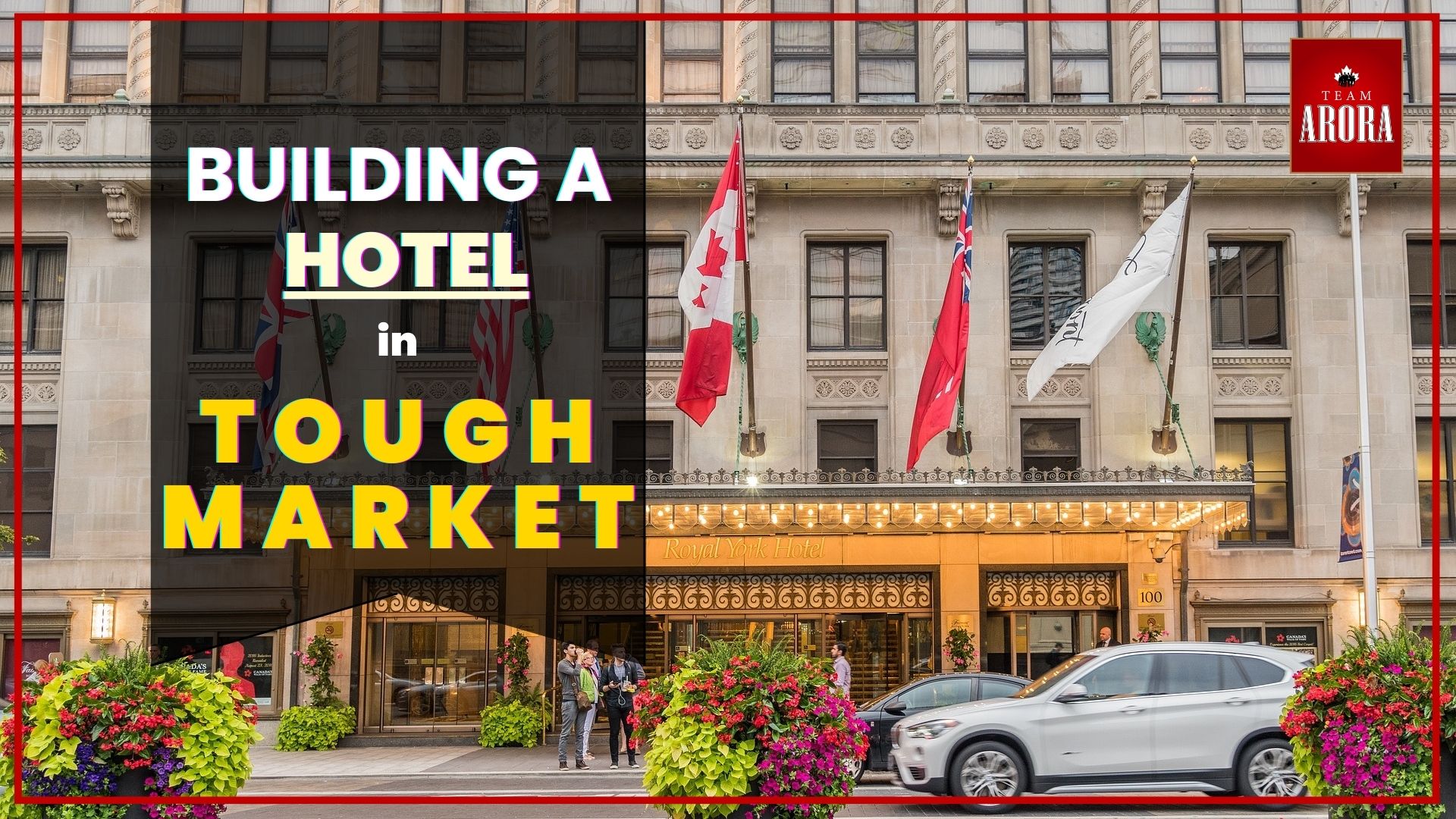
Building a Hotel in Today’s Tough Market: A Strategic Approach

Developing a hotel is an ambitious undertaking, even more so when facing the challenges of today’s economic climate. The hospitality industry is in a constant state of evolution, influenced by shifting travel trends, new consumer demands, and the ongoing impact of economic changes. Despite these challenges, building a hotel remains a promising investment, provided you navigate the complexities wisely. In this blog, I will share the lessons I’ve learned through years of experience, and explore how to build a hotel even in a tough market while ensuring its long-term success.

Understanding the Market: Today’s Challenges

The current hospitality market is marked by unique obstacles, including fluctuating demand, rising construction costs, and tighter lending standards. Post-pandemic travel trends have shifted, with guests now favoring more personalized and meaningful travel experiences, wellness-oriented stays, and sustainability-focused hotels. Before taking on the endeavor of building a hotel, it is crucial to recognize and plan for these factors. This understanding helps not only in financial planning but also in ensuring your hotel’s success in a competitive industry.

1. Identify the Right Location and Market Segment

One of the primary determinants of a hotel’s success is its location. Selecting a location involves more than just choosing a beautiful spot; it requires understanding the area’s growth potential, tourism trends, and infrastructure. Is the location accessible? Is it already popular among tourists or business travelers? Are there future developments nearby that could make the area more attractive?

Moreover, defining your hotel’s target market is key. Will you focus on luxury travelers, business professionals, budget tourists, or a niche group like adventure seekers or wellness enthusiasts? Your hotel’s concept, location, and amenities should align with the needs of your intended audience. Proper market research and competitor analysis will help you make informed decisions.

2. Secure Financing with Realistic Expectations

Building a hotel requires substantial investment, and obtaining financing in a challenging market can be difficult. Banks and lenders are cautious, especially with the hospitality industry’s recent volatility. This makes it essential to create a well-researched, persuasive business plan that clearly demonstrates the feasibility and profitability of your project.

Your financial plan should include conservative projections, taking into account fluctuating occupancy rates and unexpected costs. Additionally, considering multiple sources of funding can improve your chances—this might involve a mix of bank loans, private investors, or even partnerships. In the current climate, lenders are more likely to invest in projects that show resilience, adaptability, and a solid return on investment plan.

3. Incorporate Flexibility into Design and Operations

The ability to adapt is a valuable quality for any business, and hotels are no exception. When planning a hotel in today’s market, designing a flexible structure that can be adjusted for different purposes can increase the property’s resilience. This might involve creating convertible spaces that can serve as meeting rooms, co-working spaces, or even small event venues based on demand.

Incorporating technology into the design will also provide an advantage. Features like automated check-in, contactless payments, and energy-efficient systems are increasingly expected by guests. The more adaptable and tech-friendly your hotel is, the easier it will be to cater to the ever-changing preferences of travelers.

4. Focus on Sustainability and Wellness Features

Today’s travelers are not just looking for a place to sleep; they want experiences that align with their values. Sustainability has become a critical factor, and building a hotel that follows eco-friendly practices can enhance its market appeal. Sustainable construction materials, energy-efficient appliances, waste reduction programs, and solar power are just a few ways to build a green hotel that stands out.

Wellness is another trend that has gained prominence. Hotels that offer wellness-focused amenities—such as gyms, yoga studios, healthy dining options, and spa services—appeal to health-conscious travelers. Investing in such features can help differentiate your hotel and increase its long-term attractiveness to guests.

Also read: How to Sell a Hotel: Best Strategies in the Current Market

5. Develop Strategic Partnerships

Partnerships can play a pivotal role in the success of a hotel. Establishing relationships with local businesses, tour operators, and transportation providers can create a seamless experience for your guests, enhancing their stay. Furthermore, these partnerships can increase your hotel’s visibility in the local market and beyond.

Partnering with online travel agencies (OTAs) for bookings and promotions is also important. In a challenging market, leveraging multiple distribution channels is crucial for attracting guests and maintaining occupancy levels. Local collaborations, such as working with nearby restaurants or attractions, can also create value-added packages that entice travelers to choose your hotel.

6. Adapt to Evolving Guest Preferences

The hospitality market today is driven by guest preferences that lean towards unique, personalized experiences. Building a hotel that can cater to these desires means incorporating elements that appeal directly to your target market’s needs. For instance, some guests value an immersive cultural experience—this could mean using local artists to decorate your rooms, serving regional cuisine, or offering activities that give a sense of the local culture.

Personalized guest experiences are also increasingly expected. Using technology, such as a customer relationship management (CRM) system, can help understand guests’ preferences and tailor their experiences accordingly. Anticipating needs and exceeding expectations create a strong base for guest loyalty and positive word-of-mouth promotion.

7. Choose a Skilled Team and Effective Management System

To ensure your hotel is successful, you need a capable team in place even before construction is complete. Hiring experienced professionals who understand the nuances of the hospitality industry can make a significant difference. This includes everyone from architects and interior designers who understand guest preferences, to an operations manager skilled in running a smooth and efficient property.

The management system used also matters. Investing in property management software that optimizes bookings, tracks guest preferences, and manages the day-to-day operations will save money in the long run. A strong management system provides real-time information, which is essential for adapting to changes and making informed decisions in challenging times.

8. Marketing Your New Hotel Effectively

The success of a new hotel relies not only on how well it’s built but also on how effectively it is marketed. Marketing should begin long before the hotel is completed. Build anticipation through a well-designed website, engaging social media campaigns, and a compelling narrative about the story behind the hotel.

Local partnerships can also be part of your marketing strategy. Collaborate with local businesses, tourism boards, and influencers who resonate with your brand values to increase visibility. In addition, targeting specific segments of travelers—such as business travelers, leisure tourists, or wellness seekers—with customized promotional campaigns can be a key driver in building early brand loyalty.

9. Prepare for Unexpected Challenges

Building a hotel in today’s market is inherently risky, with numerous factors outside of your control. Economic downturns, labor shortages, rising material costs, and regulatory changes can all create hurdles. Planning for contingencies is therefore essential.

Incorporate risk mitigation strategies, such as insurance, flexible contracts, and contingency funds, into your planning process. Having backup plans in place for common construction delays or changes in demand can help keep the project on track and within budget.

Conclusion: Building a Hotel in a Tough Market

Building a hotel, especially in a tough market, requires careful planning, an understanding of the latest trends, and a willingness to adapt as situations change. Whether it’s choosing a strategic location, securing the right financing, focusing on sustainability, or effectively marketing your property, success lies in the details.

Despite the challenges, the rewards of building a successful hotel are immense. By aligning your vision with current market demands and planning thoroughly, you can build a property that not only attracts guests but also provides a lasting impact. The journey may not be easy, but with the right approach, building a hotel in a tough market can become an exciting and profitable endeavor.

Mississauga Location

268 Derry Rd W Unit 101, Mississauga, ON L5W 0H6