Why Team Arora Is Considered the Best Brampton Agents Team

The real estate market in Brampton has grown into one of the most competitive and fast-moving markets in the Greater Toronto Area. With rising demand, diverse neighbourhoods, and shifting market conditions, buyers and sellers alike require more than basic representation. They need experience, strategy, and guidance grounded in local expertise.

This is where Team Arora has earned recognition as one of the Best Brampton Agents teams. Their reputation is not built on claims alone, but on consistent results, long-term client relationships, and a professional approach that adapts to real-world market conditions.

This article explores what makes Team Arora stand out and why many buyers and sellers trust them when navigating Brampton real estate.

Deep Understanding of Brampton’s Neighbourhoods

Brampton is not a single, uniform market. Each neighbourhood has its own pricing patterns, buyer demand, school zones, and future development plans. A strategy that works in one area may not apply to another.

Team Arora’s strength lies in its deep, hands-on understanding of Brampton’s communities. This includes established neighbourhoods, newer developments, and emerging pockets of opportunity. This knowledge allows the team to provide advice that is relevant, precise, and tailored to each client’s situation.

For buyers, this means being guided toward areas that match both lifestyle and long-term value. For sellers, it means accurate pricing and positioning that aligns with local buyer expectations.

A Strategic, Data-Driven Approach

One of the key reasons Team Arora is considered among the Best Brampton Agents is their emphasis on strategy. Every transaction begins with analysis, not assumptions.

Rather than relying on generic advice, the team evaluates:

  • Recent comparable sales
  • Current market momentum
  • Buyer activity and demand trends
  • Timing and seasonality factors

This information shapes decisions related to pricing, offer strategy, and negotiation. Clients benefit from clarity and confidence instead of guesswork.

Clear Communication and Transparency

Real estate transactions often involve large financial decisions and emotional stress. Clear communication helps reduce uncertainty and builds trust.

Team Arora prioritizes transparency throughout the process. Clients are informed about market realities, potential risks, and available options. Rather than pushing quick decisions, the team ensures clients understand the implications of each step.

This communication style empowers clients to make informed choices, whether they are buying their first home or selling a long-held property.

Strong Negotiation Skills in Competitive Markets

Negotiation is a defining skill in Brampton’s real estate environment. Multiple-offer situations, inspection negotiations, and pricing adjustments require experience and composure.

Team Arora approaches negotiations strategically. By understanding both buyer and seller motivations, the team structures deals that protect their clients’ interests without escalating unnecessary risk.

This balanced approach often results in better outcomes, especially in high-pressure scenarios.

A Team-Based Model That Enhances Service

Unlike solo agents who manage every aspect alone, Team Arora operates as a coordinated team. This structure improves efficiency and consistency.

Clients benefit from:

  • Faster response times
  • Organized transaction management
  • Consistent communication
  • Support during peak market periods

This model ensures that no detail is overlooked and that service quality remains high, even during busy market cycles.

Trust Built Through Consistent Results

Trust in real estate is earned over time. Team Arora’s standing among the Best Brampton Agents reflects years of consistent performance and ethical practice.

Many clients return for repeat transactions or refer friends and family. This level of referral business indicates confidence in the team’s ability to deliver reliable outcomes.

A Real Experience from Brampton

A growing family in Brampton needed to sell their home while purchasing a larger one within a tight timeframe. Concerned about market fluctuations, they sought guidance that balanced timing, pricing, and risk.

Team Arora developed a clear plan that aligned the sale and purchase processes. Through careful coordination and communication, the family completed both transactions smoothly. The experience reinforced the value of working with a team that plans strategically rather than reacting to market pressure.

Why Professional Guidance Matters More Than Ever

Brampton continues to attract families, professionals, and investors. As the market evolves, informed decision-making becomes increasingly important.

Professional teams like Team Arora provide guidance grounded in local knowledge, market data, and experience. This combination helps clients navigate change with confidence.

Frequently Asked Questions

1. Why is Team Arora considered one of the Best Brampton Agents teams?

Team Arora is considered among the Best Brampton Agents due to their strong local expertise, transparent communication, and results-driven strategies. Their team-based approach ensures consistent service, while their experience helps clients make informed decisions in a competitive market.

2. Does Team Arora work with both buyers and sellers?

Yes. Team Arora works with buyers and sellers across Brampton. This dual perspective allows them to understand market dynamics from both sides, resulting in stronger negotiation strategies and more accurate pricing guidance.

3. How does Team Arora help first-time buyers?

First-time buyers receive step-by-step guidance, clear explanations, and market education. Team Arora focuses on affordability, neighbourhood fit, and long-term value, helping new buyers feel confident throughout the process.

4. What makes their approach different from other agents?

Their approach combines data-driven strategy, local knowledge, and a collaborative team model. Instead of generic advice, clients receive personalized guidance tailored to their goals and Brampton’s specific market conditions.

5. How does Team Arora handle multiple-offer situations?

In competitive scenarios, Team Arora evaluates pricing trends, seller motivation, and timing. They advise clients on offer structure and risk management, helping them remain competitive without overextending financially.

6. Is local knowledge really that important in Brampton?

Yes. Brampton’s neighbourhoods differ significantly in pricing, schools, and growth potential. Local knowledge allows agents to provide accurate advice and avoid costly mistakes tied to overpricing or misjudging demand.

7. How does the team ensure smooth transactions?

The team’s structured systems manage documentation, deadlines, and communication efficiently. This reduces delays and keeps clients informed, resulting in smoother and more predictable transactions.

8. Does Team Arora assist with investment properties?

Yes. Team Arora works with investors by evaluating rental potential, neighbourhood growth, and resale value. Their analysis helps investors align purchases with long-term financial goals.

9. What type of clients does Team Arora typically serve?

The team works with a wide range of clients, including first-time buyers, families, downsizers, and investors. Their adaptable approach allows them to meet diverse needs within Brampton’s evolving market.

10. How can someone decide if Team Arora is the right fit?

Clients should consider whether they value transparency, local expertise, and strategic planning. Speaking directly with the team and understanding their approach helps determine alignment with personal real estate goals.

Disclaimer

This blog is for informational purposes only and does not constitute legal, financial, or professional real estate advice. Market conditions vary, and readers should consult licensed professionals before making property decisions.


Sources & Citations

Foreclosure of Sale – Everything You Need to Know

The real estate market is full of opportunities, but it can also be unpredictable. One term that often comes up in property transactions—especially when financial difficulties arise—is foreclosure of sale. While the concept might seem intimidating, understanding how foreclosure works, why it happens, and what your rights and options are can help you navigate the process more confidently.

In this comprehensive guide, we’ll explore the meaning of foreclosure of sale, how it works, its implications for homeowners and buyers, and how to handle the situation effectively.

What Is Foreclosure of Sale?

Foreclosure of sale is a legal process where a lender takes possession of a property after the homeowner fails to meet mortgage payment obligations. The property is then sold—often at auction—to recover the outstanding loan amount.

In most cases, foreclosure occurs after several missed payments, and the lender has exhausted all other methods to collect the debt. The foreclosure sale marks the final stage in the process, transferring ownership of the property to the highest bidder or back to the lender if no acceptable bids are received.

Why Foreclosure Happens

Foreclosure is rarely an overnight event. It is typically the result of prolonged financial strain on the homeowner. Common causes include:

  • Job Loss or Reduced Income – Unexpected unemployment or reduced hours can make it hard to keep up with mortgage payments.

  • Medical Emergencies – High medical bills can shift priorities away from mortgage obligations.

  • Rising Interest Rates – For adjustable-rate mortgages, payment amounts can increase significantly, making them unaffordable.

  • Divorce or Separation – Splitting households can impact the ability to meet financial obligations.

  • Unexpected Expenses – Major home repairs or family emergencies can divert funds.

Regardless of the cause, foreclosure is a legal remedy for lenders to recover funds when a mortgage goes unpaid.

Types of Foreclosure Sales

The foreclosure process varies depending on jurisdiction, but there are generally two primary types:

1. Judicial Foreclosure

This process is handled through the court system. The lender files a lawsuit against the borrower, and if the court rules in the lender’s favor, the property is ordered for sale. Judicial foreclosures can take longer because of the legal proceedings involved, but they allow borrowers more time to respond or contest the case.

2. Non-Judicial Foreclosure

In states or provinces that allow it, non-judicial foreclosure does not require court approval. Instead, the lender follows the process outlined in the mortgage agreement or deed of trust. This approach is typically faster but may offer fewer opportunities for the borrower to stop the sale.

The Foreclosure of Sale Process

While exact timelines vary, here’s a general overview of how the foreclosure of sale unfolds:

  1. Missed Payments – The borrower fails to make one or more mortgage payments.

  2. Notice of Default – After several missed payments, the lender issues a notice of default, informing the borrower of their delinquency.

  3. Pre-Foreclosure Period – The borrower may have an opportunity to reinstate the loan by paying overdue amounts plus penalties.

  4. Notice of Sale – If the default is not resolved, the lender issues a notice of sale, setting a date for auction.

  5. Foreclosure Sale – The property is sold at public auction to the highest bidder.

  6. Post-Sale Period – If state law allows, the borrower may have a redemption period to reclaim the property by paying the full amount owed.

Implications for Homeowners

Facing foreclosure can be overwhelming, but understanding the consequences helps in making informed decisions:

  • Loss of Home – The most obvious consequence is losing ownership of your property.

  • Credit Score Impact – A foreclosure can significantly lower your credit score and remain on your credit report for up to seven years.

  • Deficiency Judgment – If the foreclosure sale doesn’t cover the full mortgage balance, the lender may seek a judgment for the remaining amount.

  • Emotional Stress – The process can be mentally and emotionally taxing for homeowners and their families.

Options to Avoid Foreclosure of Sale

Homeowners facing financial difficulties have several potential avenues to avoid foreclosure:

  1. Loan Modification – Renegotiating mortgage terms to make payments more affordable.

  2. Forbearance Agreement – Temporarily pausing or reducing payments while financial issues are resolved.

  3. Repayment Plan – Catching up on overdue payments through an agreed schedule.

  4. Short Sale – Selling the home for less than the remaining mortgage balance with lender approval.

  5. Deed in Lieu of Foreclosure – Voluntarily transferring ownership to the lender to avoid a foreclosure record.

Opportunities for Buyers in Foreclosure Sales

For buyers and investors, foreclosure sales can present opportunities to acquire property at below-market prices. However, these deals often come with risks:

  • As-Is Purchases – Foreclosure properties are usually sold without repairs or warranties.

  • Unpaid Liens – Buyers may be responsible for unpaid property taxes or liens.

  • Limited Inspections – Access to inspect the property before purchase may be restricted.

Working with a real estate agent who specializes in foreclosures can help mitigate these risks.

How to Participate in a Foreclosure Auction

If you’re interested in buying at a foreclosure sale:

  1. Research Properties – Use public notices, online databases, and courthouse records to identify upcoming sales.

  2. Understand the Rules – Each jurisdiction has specific requirements for bidding and payment.

  3. Arrange Financing – Many auctions require full payment in cash or certified funds at the time of sale.

  4. Set a Budget – Determine your maximum bid to avoid overpaying.

  5. Attend the Auction – Be prepared to act quickly and decisively.

Legal Considerations in Foreclosure Sales

Foreclosure laws vary widely by jurisdiction, so it’s essential to consult a real estate lawyer or foreclosure specialist. Key legal aspects include:

  • Right of Redemption – In some areas, homeowners can reclaim their property after the sale by paying the debt in full.

  • Deficiency Laws – Regulations may limit a lender’s ability to collect any remaining debt after the sale.

  • Notice Requirements – Lenders must follow strict notice and timing rules before a foreclosure sale.

FAQs on Foreclosure of Sale

1. How long does the foreclosure process take?

The timeline can range from a few months to over a year, depending on the type of foreclosure and local laws. Judicial foreclosures generally take longer due to court involvement, while non-judicial foreclosures can move more quickly. Borrowers often have a pre-foreclosure period in which they can negotiate or make up missed payments.

2. Can I stop a foreclosure once the sale is scheduled?

Yes, in many cases, foreclosure can still be stopped before the sale date. Options include reinstating the mortgage, negotiating a loan modification, filing for bankruptcy (which temporarily halts foreclosure), or reaching a settlement with the lender. The earlier you act, the more options you have.

3. Will a foreclosure sale erase all my debts?

Not necessarily. While the sale may satisfy the mortgage debt, you could still owe a deficiency balance if the sale price is less than the total debt. Some jurisdictions prohibit deficiency judgments for certain loans, while others allow lenders to pursue the difference

4. Is buying a foreclosure a good investment?

It can be, but due diligence is crucial. Foreclosed properties often sell at a discount, but they may require extensive repairs or come with legal complications. Working with professionals—such as real estate agents, inspectors, and attorneys—can help ensure a sound investment.

5. What happens if no one bids at the foreclosure auction?

If no acceptable bids are received, the property typically reverts to the lender as Real Estate Owned (REO) property. The lender may then list it for sale through traditional real estate channels.

6. How does foreclosure affect my ability to buy another home?

A foreclosure can impact your credit score significantly, making it harder to qualify for a new mortgage. Most lenders require a waiting period—typically between two to seven years—before approving a new loan, depending on the loan type and borrower’s credit recovery.

Conclusion

Foreclosure of sale is a complex and often stressful process for homeowners, but it’s also a mechanism that ensures lenders can recover unpaid debts. For buyers and investors, it can represent an opportunity—if approached with caution and preparation.

Whether you’re facing foreclosure or considering buying a foreclosed property, knowledge is your best tool. Understanding the process, knowing your rights, and seeking professional guidance can help you navigate this challenging area of real estate with confidence.

Commercial Real Estate in New Brunswick: A Strategic Investor’s Guide

Commercial real estate in New Brunswick is drawing attention—and for good reason. With lower entry costs, strong cap rates, and emerging development zones, this Atlantic province is becoming a hub for smart investors, entrepreneurs, and developers. Whether you’re a seasoned investor or just starting out, New Brunswick’s commercial market holds untapped potential worth exploring.

In this guide, we break down why this region is a hidden gem, how to approach investment opportunities, and what role a trusted Commercial Real Estate agent in New Brunswick can play in your journey.

Why New Brunswick?

New Brunswick offers a rare blend of affordability and opportunity. Unlike overheated markets in Toronto or Vancouver, the province’s commercial properties provide higher yields and fewer barriers to entry. Its strategic location—bordering Quebec, Nova Scotia, and the U.S.—makes it a key trade and logistics point in Atlantic Canada.

From industrial parks to revitalized downtown cores, cities like Moncton, Fredericton, and Saint John are seeing a rise in commercial activity.

Types of Commercial Real Estate You’ll Find

Investors and developers are tapping into various types of properties:

  • Industrial Warehouses: Rising demand for logistics and distribution.
  • Retail Plazas: Small and mid-sized tenants looking for suburban hubs.
  • Office Space: Especially near government centers and tech corridors.
  • Mixed-Use Developments: Blending retail, office, and residential spaces.

By working with a Commercial Real Estate agent in New Brunswick, you can identify which property types best align with your investment goals.

Top Cities for Investment

Moncton: Known as a transportation and business hub, Moncton offers thriving retail corridors, strong population growth, and a diverse economy.

Saint John: With Canada’s third-largest port, Saint John is perfect for industrial and logistics investments.

Fredericton: Home to government offices and a growing tech scene, this city has consistent demand for office and institutional spaces.

Each of these cities provides different advantages—and a local agent can help you navigate zoning, pricing, and leasing potential.

Market Trends in 2025

  • Industrial Real Estate is outperforming other asset classes due to e-commerce demand.
  • Retail Spaces are shifting toward mixed-use or experiential models.
  • Remote Work is reshaping office demand—creating opportunity in coworking and flexible leases.
  • Sustainability is becoming a priority for tenants and investors alike.

Staying ahead of these trends gives you an edge—and a local expert can help interpret how they apply in New Brunswick.


Also read: Exploring Commercial Real Estate in New Brunswick: Your Guide to Growth & Opportunity

Role of a Commercial Real Estate Agent in New Brunswick

Having the right agent isn’t just helpful—it’s essential. A Commercial Real Estate agent in New Brunswick brings:

  • Insider knowledge of market performance
  • Access to off-market listings
  • Expertise in negotiation and due diligence
  • Guidance through zoning and permits
  • Network connections for legal, financing, and inspection

The right professional can help you avoid costly mistakes and make well-informed decisions.

Government Incentives & Programs

New Brunswick offers support for commercial buyers, such as:

  • Property tax rebates
  • Downtown revitalization grants
  • Regional development fund access
  • Fast-track permitting for industrial and commercial builds

These incentives vary by municipality and project type. An experienced agent can help you apply and qualify.

Common Challenges to Navigate

Every market has its obstacles. In New Brunswick, keep in mind:

  • Slower appreciation compared to larger markets
  • Regional variations in tenant demand
  • Long-term lease commitments
  • Climate-related property maintenance needs

Proper research and partnering with a knowledgeable commercial real estate agent help reduce these risks.

Get our info by clicking here

Final Thoughts


Commercial real estate in New Brunswick offers exciting, scalable, and sustainable opportunities. From bustling port cities to government-focused urban centers, this province is on the cusp of a real estate evolution. Whether you’re an investor seeking better returns or a business owner looking to expand, consider New Brunswick as your next move.

And remember: A qualified Commercial Real Estate agent in New Brunswick can turn possibilities into results.

FAQs: Commercial Real Estate in New Brunswick

  1. Is New Brunswick a good place to invest in commercial real estate?
    Yes, New Brunswick is appealing for investors due to its affordability, improving infrastructure, and growing demand for retail and industrial properties. The province’s smaller markets allow for strong cap rates and lower acquisition costs compared to larger provinces, making it a smart choice for long-term investment.
  2. What types of commercial properties are in demand in New Brunswick?
    Industrial and mixed-use developments are highly sought after, particularly in Moncton and Saint John. Retail plazas, medical offices, and flexible office spaces are also gaining traction due to population growth, changing work patterns, and evolving tenant preferences.
  3. How does the commercial real estate market in New Brunswick compare to larger provinces?
    While it may not offer the rapid appreciation of Toronto or Vancouver, New Brunswick’s market is more stable and less saturated. Investors enjoy higher rental yields, affordable property taxes, and less speculative volatility—ideal for long-term, income-focused strategies.
  4. Are there any government incentives for commercial property investors in New Brunswick?
    Yes, various municipal and provincial programs exist to support commercial development. These include tax breaks, renovation grants, and development zone incentives. Local commercial real estate agents are typically familiar with these opportunities and can help you navigate the application process.

5. Why should I hire a commercial real estate agent in New Brunswick?
A local expert provides essential guidance on pricing, zoning, tenant demand, and legal compliance. Their market insight, negotiation skills, and network can save you time, money, and stress. Whether you’re buying or leasing, an experienced agent ensures your investment aligns with your goals.

10 Family-Friendly and Relaxing Things to Do Near Fort Erie in 2025

If you’ve ever dreamed of living in a place that offers the charm of a small town, the proximity to nature, and the conveniences of a connected lifestyle, Fort Erie may already be on your radar. Tucked away along the Niagara River, just a short drive from the Greater Toronto Area, Fort Erie is quickly becoming one of Southern Ontario’s most desirable places to live—especially for families, retirees, and professionals seeking peaceful, meaningful living.

Whether you’re already in the area or just beginning to explore what life in Fort Erie could offer, here’s a full guide to 10 relaxing and family-friendly things to do near Fort Erie this year.

1. Spend the Day at Crystal Beach

Crystal Beach is Fort Erie’s summer sweetheart. With soft sand, turquoise water, and a welcoming boardwalk, it’s the kind of place that makes you want to stay a little longer. Families often spend the entire day here building sandcastles, swimming, or trying out local food vendors like San Vito’s or the Palmwood.

It’s not just for tourists—locals love that this pristine beach is never too far from home.

2. Visit Old Fort Erie and Dive into History

History buffs and curious kids alike will enjoy Old Fort Erie, a site that played a crucial role during the War of 1812. Interactive reenactments, guided tours, and riverside scenery bring Canadian history to life.

Imagine living just minutes away from a national landmark—where your children can learn from the past while building their future.

3. Walk or Cycle the Niagara River Recreation Trail

This 56-km multi-use path runs along the stunning Niagara River and passes through Fort Erie. Whether you’re biking, jogging, or strolling, the path offers scenic views, shaded rest stops, and picnic areas. It’s also dog-friendly and perfect for weekend family outings.

The best part? This kind of nature access doesn’t require a vacation—it’s your backyard.

4. Waverly Beach Park: A Hidden Gem

While Crystal Beach often gets the spotlight, Waverly Beach Park is a quieter retreat with open spaces, shaded walking paths, and breathtaking lakefront views. It also has a children’s splash pad, making it a hit with young families.

For those who value daily moments of calm, Waverly Beach is an everyday luxury.

5. Explore Ridgeway’s Local Culture

Just 10 minutes from central Fort Erie, Ridgeway is a charming village with big personality. Its historic main street is lined with boutiques, cafes, vintage shops, and a bustling farmers market every Saturday.

Locals love brunch at the Kitchen by Matt Dean Pettit or browsing handmade goods at the Ridge Film House artisan market. The village vibe is authentic and community-focused—a perfect weekend getaway or a permanent lifestyle shift.

6. Tour Niagara’s Underrated Wineries

You don’t have to drive all the way to Niagara-on-the-Lake to experience wine country. Fort Erie is increasingly surrounded by boutique vineyards and family-run wineries offering tastings, pairings, and even farm-to-table dinners.

In a post-pandemic world, people are looking for slower, more intentional living—and Fort Erie delivers.

7. Kayak or Fish Along the Niagara River

Fort Erie offers direct access to the Upper Niagara River, a paradise for kayaking, paddleboarding, and fishing. Whether you want to rent equipment or join a local guided tour, this region is perfect for those who thrive in the outdoors.

It’s especially ideal for families wanting to disconnect from screens and reconnect with nature.

8. Discover Local Events and Summer Festivals

From the Friendship Festival to Art by the Market, Fort Erie celebrates community all year long. These events are small enough to feel local but large enough to offer food trucks, live music, crafts, and plenty of activities for kids.

Buying a home here means becoming part of something—something real.

9. Day Trip to Niagara Falls (Without the Noise)

One of Fort Erie’s biggest lifestyle perks? You’re just 20–25 minutes from Niagara Falls, one of the world’s most famous attractions—but far enough to enjoy peace and quiet at home.

Take a weekend to explore Clifton Hill, dine with a view of the Falls, or take the kids on the Niagara SkyWheel. Then head back home to the calm of Fort Erie.

10. Catch a Sunset You’ll Never Forget

Whether from your porch, the waterfront trail, or a scenic lookout, Fort Erie sunsets are spectacular. This natural beauty—paired with the slower rhythm of the town—has made the area especially popular with young families and GTA transplants looking to escape city pressure.

It’s not just a weekend destination—it’s a lifestyle.


🏡 Why Fort Erie Is on the Radar in 2025

Fort Erie is no longer a secret.

In recent years, a growing number of buyers from Mississauga, Brampton, and even downtown Toronto have turned their attention toward Niagara South. And for good reason:

  • Housing is more affordable than the GTA

  • Highway and border access make commuting or business travel easy

  • Remote work flexibility means you don’t need to sacrifice career for calm

  • The rise of mixed-use communities makes daily life walkable and vibrant

With new infrastructure projects, walkable developments, and interest from young families and investors alike, Fort Erie is poised for responsible growth—without losing its soul.


🧭 The Team Arora Perspective

At Team Arora, we’ve helped hundreds of families transition from fast-paced city life to more peaceful living—without giving up access, opportunity, or community.

If Fort Erie speaks to your vision of home, our local insight and commitment can help guide you, whether you’re searching for a family home, a lakeside retreat, or a long-term investment.

Explore our current listings or contact us for personalized guidance—we’ll help you find not just a property, but a place to thrive.


FAQs About Living Near Fort Erie

1. Is Fort Erie a good place to raise a family?

Absolutely. Fort Erie offers a family-first environment with great schools, safe neighborhoods, and abundant outdoor space. The pace of life is slower compared to larger cities, giving children more room to play and parents a stronger sense of community. Many parks, recreational centers, and youth programs make it easy to stay engaged without the stress of heavy traffic or urban noise.

2. How far is Fort Erie from major cities like Toronto or Mississauga?

Fort Erie is approximately 1 hour 30 minutes from Mississauga and around 1 hour 45 minutes from downtown Toronto, depending on traffic. Its location along the QEW and proximity to the U.S. border via the Peace Bridge also make it ideal for both commuting and weekend getaways.

For remote workers, this means enjoying a quieter lifestyle without sacrificing access to big-city amenities.

3. What kind of real estate is available in Fort Erie?

Fort Erie offers a variety of housing options—from single-family homes and modern townhomes to larger properties near the waterfront. There are also new pre-construction developments that blend residential living with walkable shopping and recreational areas. These communities appeal to both investors and homebuyers looking for long-term value and lifestyle benefits.

4. Is Fort Erie only a summer destination?

While Fort Erie shines in the summer, it’s truly a four-season town. Fall brings vibrant foliage and wine festivals, winter offers ice skating and cozy community events, and spring is filled with farmers markets and riverside walks. Its year-round livability is one reason why more people are choosing it as a permanent home rather than a seasonal retreat.

5. Is real estate in Fort Erie a good investment in 2025?

Yes. With rising prices across the GTA, Fort Erie presents an affordable entry point with strong potential for appreciation. Infrastructure upgrades, new community developments, and increasing interest from out-of-town buyers are driving demand. As more families and professionals look for quieter, more connected living, Fort Erie stands out as both a lifestyle upgrade and a smart investment.

Most Expensive Areas in Brampton: Where Luxury Lives

Brampton is quickly becoming one of the most sought-after cities in the Greater Toronto Area (GTA), not just for first-time homebuyers and growing families, but also for high-net-worth individuals and investors seeking luxury living. While the city is often highlighted for its affordability compared to downtown Toronto, there’s another side to Brampton—one that speaks of prestige, large estate homes, gated-style communities, and neighborhoods lined with million-dollar mansions.

In this blog, we’ll take a deep dive into the most expensive areas in Brampton, what makes them stand out, and why luxury buyers are increasingly drawn to them. Spoiler alert: these neighborhoods are more than just a status symbol—they’re smart investments backed by lifestyle advantages, location perks, and limited availability.

Why Brampton Is Attracting Luxury Buyers

Luxury real estate buyers are no longer limiting themselves to Toronto’s traditional elite areas like Rosedale, Forest Hill, or The Bridle Path. Many are now turning to Brampton for a mix of space, greenery, custom-built homes, and access to major highways and urban conveniences.

Here’s why:

  • Bigger homes at better value compared to Toronto’s core.
  • Proximity to Pearson Airport, major highways, and tech hubs.
  • A growing number of prestigious schools and amenities.
  • The perfect balance of urban convenience and suburban charm.

📍 Top 5 Most Expensive Areas in Brampton

These five locations have consistently remained on the radar for luxury real estate buyers, whether they’re upgrading for lifestyle or investing in future resale value.

1. Toronto Border (Steeles Ave / Mississauga Rd Corridor)

Let’s start with a bit of a curveball—this technically isn’t inside Toronto, but the area of Brampton bordering Toronto is one of the most desirable (and expensive) real estate belts in the city.

Highlights:

  • Immediate access to Toronto while enjoying Brampton’s space and affordability.
  • Close to Steeles Avenue, Highway 407, and 401, making commuting a breeze.
  • Homes here are typically custom-built, sitting on spacious lots with modern finishes.
  • Nearby industrial and commercial zones make it a favorite for business owners and professionals.

Whether you’re a CEO looking to avoid downtown congestion or a family wanting elite schools while staying within GTA’s best-connected region, this neighborhood has you covered.

2. Highway 427 Area (Ebenezer, The Gore Rd, Queen St E)

Located on the eastern edge of Brampton, the Highway 427 corridor is a magnet for luxury buyers who value privacy, accessibility, and architectural aesthetics.

Highlights:

  • Brand new luxury developments and custom estates.
  • Seamless connection to Highway 427 extension.
  • Minutes away from Vaughan and Woodbridge.
  • Surrounded by green space, golf courses, and premium retail plazas.

The 427 area is fast becoming an executive enclave, especially for professionals working in logistics, finance, and real estate. Property values here have shown consistent appreciation over the last decade.

3. Huttonville Area (Heritage Rd & Bovaird Dr)

Located in west Brampton, Huttonville is a hidden gem. This area blends rural charm with elite living, offering a countryside feel within city limits.

Highlights:

  • Home to multi-million-dollar estate homes with oversized lots.
  • Near Lionhead Golf & Country Club, a premium destination for golf lovers.
  • Surrounded by conservation lands, protected woodlands, and the Credit River.
  • Highly exclusive, with limited inventory.

If you’re looking for privacy, natural beauty, and the ability to build your dream home, Huttonville delivers. Its country-lane setting and historical roots make it truly unique.


Read more: The Hotel Business in Canada: Growth, Challenges, and Insights

4. Castlemore Area

Ask any Bramptonite about luxury living, and chances are they’ll mention Castlemore—one of the city’s most well-known and prestigious areas.

Highlights:

  • Known for large detached homes, many over 4,000 sq. ft.
  • Home to some of Brampton’s most prominent families and business owners.
  • Impeccably maintained properties with landscaped frontages and gated driveways.
  • Close to places of worship, top-rated schools, and shopping hubs.

Castlemore is not just a neighborhood; it’s a status symbol. With homes ranging from $1.5M to $3M+, it remains a top pick for those who want to make a bold real estate statement.

5. Credit Valley

Nestled along the western corridor, Credit Valley is often called the “new face of Brampton luxury.” With new construction booming over the past decade, this area is now a blend of modern design and traditional luxury.

Highlights:

  • Close to Mount Pleasant GO Station, making it a commuter’s dream.
  • Beautifully designed communities with high-end finishes and layouts.
  • Near Brampton’s best parks, trails, and schools.
  • A favorite among young professionals and upwardly mobile families.

Credit Valley offers upscale suburban living at its finest. Whether it’s a detached brick home with a double garage or a smartly designed townhome with a rooftop patio, this area balances comfort and sophistication.

What Drives Up Prices in These Areas?

Several factors contribute to the high property values in Brampton’s elite neighborhoods:

  1. Lot Size & Custom Builds – Bigger land parcels mean more room for larger homes, outdoor pools, and lavish landscaping.
  2. Scarcity – These areas have limited resale inventory, driving up competition.
  3. Location Perks – Proximity to highways, GO stations, and business zones.
  4. Schools & Amenities – Access to well-ranked schools, shopping centers, and recreational facilities.
  5. Demographic Shifts – A growing influx of professionals, business owners, and immigrants with higher purchasing power.

Is Investing in a Luxury Brampton Home Worth It?

Absolutely—if you play it smart.

Here’s why:

  • Equity growth in these areas has consistently outperformed the Brampton average.
  • Rental demand for executive homes is rising (ideal for temporary corporate relocations).
  • Modern homes mean fewer renovations and long-term savings.
  • Plus, you’re buying into a community and lifestyle, not just a property.

That said, working with a local expert is essential to avoid overpriced listings or hidden maintenance costs.

How Team Arora Can Help You

At Team Arora, we specialize in helping clients navigate the high-end Brampton market with confidence. Whether you’re looking for:

  • An off-market deal in Castlemore,
  • A custom build opportunity in Huttonville,
  • Or a move-in ready mansion near Toronto’s edge,

We offer:

  • Private showings,
  • Comparative market analysis,
  • And in-depth knowledge of Brampton’s luxury scene.

With our finger on the pulse of real estate trends and a proven track record of success, we’ll help you find the perfect match for your lifestyle and budget.

Final Thoughts: Ready to Move Up?

Brampton’s most expensive areas aren’t just about price tags—they offer space, serenity, sophistication, and solid returns. Whether you want to escape the bustle of Toronto or make a long-term investment in one of the GTA’s fastest-growing cities, these five neighborhoods deliver the best of both worlds.

Explore Brampton’s elite with Team Arora. Contact us today to book a personalized consultation or private property tour.

FAQ’S

1. What makes Brampton’s luxury neighborhoods stand out in the Greater Toronto Area?

Brampton’s most prestigious neighborhoods combine spacious estate homes, lush green surroundings, and excellent connectivity to nearby urban hubs. Unlike denser parts of the GTA, Brampton’s upscale communities—such as the Steeles Avenue corridor or Castlemore area—offer larger lots, elegant architectural designs, and quiet, well-maintained streets. Residents benefit from top-tier schools, golf courses, recreational centers, and proximity to highways like 407 and 427. This blend of privacy, convenience, and modern infrastructure sets these neighborhoods apart. Whether you’re raising a family or seeking a quieter retreat close to Toronto, Brampton’s luxury pockets provide both comfort and value in a city that continues to grow in stature and sophistication.


2. How does high-end real estate in Brampton compare to Toronto’s core?

Luxury properties in Brampton often offer more square footage, newer construction, and generous lot sizes than comparable homes in downtown Toronto—at relatively better value. While Toronto’s high-end market is known for its centrality and prestige, it also comes with steeper price tags and limited space. In contrast, Brampton’s upscale communities appeal to buyers looking for grandeur without the downtown congestion. These areas feature modern finishes, quiet suburban surroundings, and easier access to nature, making them attractive to professionals, families, and investors alike. Buyers often choose Brampton to balance lifestyle quality, long-term growth, and a smart return on investment.


3. Is Brampton’s luxury housing market a smart investment choice?

For investors seeking long-term appreciation and rental potential, Brampton’s high-end housing market presents a promising opportunity. The city’s consistent population growth, infrastructure development, and increasing desirability among professionals and families all contribute to rising property values. Upscale neighborhoods like Credit Valley and Vales of Castlemore are especially in demand due to their strategic location, quality schools, and attractive home designs. With luxury homes offering larger spaces and appealing layouts, rental income potential also remains high. While no investment is without risk, Brampton’s combination of growth momentum and community planning makes its luxury segment a compelling area to consider for investors focused on value and stability.


4. What kind of lifestyle do Brampton’s affluent neighborhoods offer?

Living in Brampton’s upscale communities means more than just owning a beautiful home—it’s about enjoying an elevated lifestyle. Residents typically enjoy quiet, well-landscaped neighborhoods with easy access to parks, walking trails, and community clubs. Many areas offer proximity to golf courses, cultural venues, high-end retail, and fine dining options. For families, there are reputable public and private schools, along with convenient access to healthcare facilities and daycare centers. The lifestyle is both peaceful and connected—offering privacy while still being close to the city’s amenities. It’s ideal for homeowners who value space, comfort, and a sense of belonging in a premium residential setting.


5. What types of homes are commonly found in Brampton’s luxury areas?

Luxury homes in Brampton come in a variety of styles, from elegant traditional designs to sleek contemporary builds. Many properties feature stone or brick exteriors, high ceilings, custom kitchens, expansive basements, and landscaped backyards. In areas like the Highway 427 corridor and Castlemore, you’ll find multi-car garages, open-concept interiors, and upscale finishes that cater to modern tastes. Whether it’s a detached estate home or a custom-built mansion, the focus is always on spacious layouts, high-quality materials, and premium design. These homes are often ideal for growing families, multi-generational living, or buyers seeking luxurious living with room to grow and entertain.

Commercial vs. Residential Real Estate: Understanding the Differences and Investment Opportunities

Embarking on a career or investing in real estate involves understanding two major categories: commercial and residential real estate. Each has its distinct characteristics, advantages, and considerations. This guide clearly outlines the differences between commercial and residential real estate, helping you make informed decisions whether you’re investing, buying, or selling.

What is Residential Real Estate?

Residential real estate refers to properties designed primarily for living purposes. These include single-family homes, townhouses, condominiums, duplexes, and apartments. Residential properties typically serve as either primary residences or rental units.

Benefits of Investing in Residential Real Estate

  1. Lower Entry Costs: Residential properties generally require lower upfront capital compared to commercial properties, making it easier for new investors to enter the market.
  2. High Demand: The demand for residential real estate remains consistently high, driven by population growth and housing needs.
  3. Easier Financing: Obtaining mortgages for residential properties is often simpler, with more accessible lending options and lower interest rates.
  4. Stable Cash Flow: Residential properties offer steady income streams through rent, providing financial stability for investors.
  5. Tax Benefits: Residential investors can take advantage of mortgage interest deductions, depreciation, and other tax-saving strategies.

Considerations for Residential Real Estate

  • Tenant Management: Residential investors frequently deal with tenant management issues, maintenance requests, and vacancy periods.
  • Regulatory Compliance: Landlord-tenant regulations can be strict, requiring investors to be familiar with local laws and property management practices.
  • Market Saturation: In high-demand areas, property prices may be inflated, reducing cash-on-cash returns.

What is Commercial Real Estate?

Commercial real estate includes properties used exclusively for business purposes, such as office buildings, retail spaces, industrial facilities, warehouses, hotels, and multifamily complexes (with five or more units).

Benefits of Investing in Commercial Real Estate

  1. Higher Income Potential: Commercial properties typically generate higher returns due to longer leases, higher rental rates, and diversified income streams.
  2. Professional Tenant Relationships: Tenants are usually businesses, resulting in more professional interactions and fewer emotional or personal conflicts.
  3. Longer Lease Terms: Commercial leases often span multiple years, providing consistent income and reduced vacancy risk.
  4. Property Appreciation: Commercial real estate can appreciate significantly, especially in thriving business areas or during periods of economic growth.
  5. Triple Net Leases: Many commercial leases require tenants to cover maintenance, insurance, and taxes, reducing operational burdens for landlords.

Considerations for Commercial Real Estate

  • Higher Capital Requirements: Commercial real estate generally demands greater upfront investments and operational costs.
  • Complex Financing: Obtaining financing for commercial properties can be more complicated, involving higher interest rates and stricter lending criteria.
  • Economic Sensitivity: Commercial properties are closely tied to economic cycles, and downturns can significantly impact vacancy rates and property values.
  • More Intensive Due Diligence: Investors must conduct thorough analysis of location, tenant history, cap rates, and zoning.

Key Differences Between Commercial and Residential Real Estate

Purpose

  • Residential: Primarily for personal living.
  • Commercial: Used for business and revenue-generating activities.

Financing

  • Residential: Easier to finance with numerous mortgage options.
  • Commercial: More complex, typically requiring specialized commercial loans.

Lease Terms

  • Residential: Shorter leases, often renewed annually.
  • Commercial: Longer lease agreements, usually several years.

Property Management

  • Residential: Often managed directly by owners or smaller property management companies.
  • Commercial: Typically involves professional property management and complex tenant relationships.

Risk and Return

  • Residential: Lower risk, moderate returns.
  • Commercial: Higher risk, potentially higher returns.

Making the Right Investment Choice

Choosing between commercial and residential real estate depends on your financial goals, investment experience, available capital, and risk tolerance.

For New Investors

Residential real estate often represents a safer entry point due to lower capital requirements, straightforward financing options, and stable demand. It’s ideal for those who prefer manageable responsibilities and familiarity with the housing market.

For Experienced Investors

Commercial real estate offers attractive opportunities to diversify portfolios, achieve higher returns, and manage professional tenant relationships. It’s well-suited for investors seeking scalability, portfolio diversification, and long-term financial growth.

Real-Life Example: Comparing Two Scenarios

Scenario A – Residential: Jane buys a duplex in Brampton and rents out both units. She manages the property herself, collects rent monthly, and builds equity. The property generates stable cash flow and appreciates steadily over time.

Scenario B – Commercial: Mark invests in a small retail plaza with three long-term tenants. He hires a property manager, collects triple net rent, and earns higher monthly income. However, his initial investment and risk exposure are significantly higher.

Both scenarios are profitable, but they cater to different investment styles and risk appetites.

Conclusion

Whether considering commercial or residential real estate, understanding the distinct advantages, challenges, and investment potential of each is essential. By carefully evaluating your goals and resources, you can select the type of real estate investment that best aligns with your financial objectives and lifestyle.

Ready to start your real estate journey? Whether commercial or residential, Ontario’s thriving market offers numerous opportunities to grow your investment portfolio successfully.


Sources & Citations:

Not solicit buyer under any contract

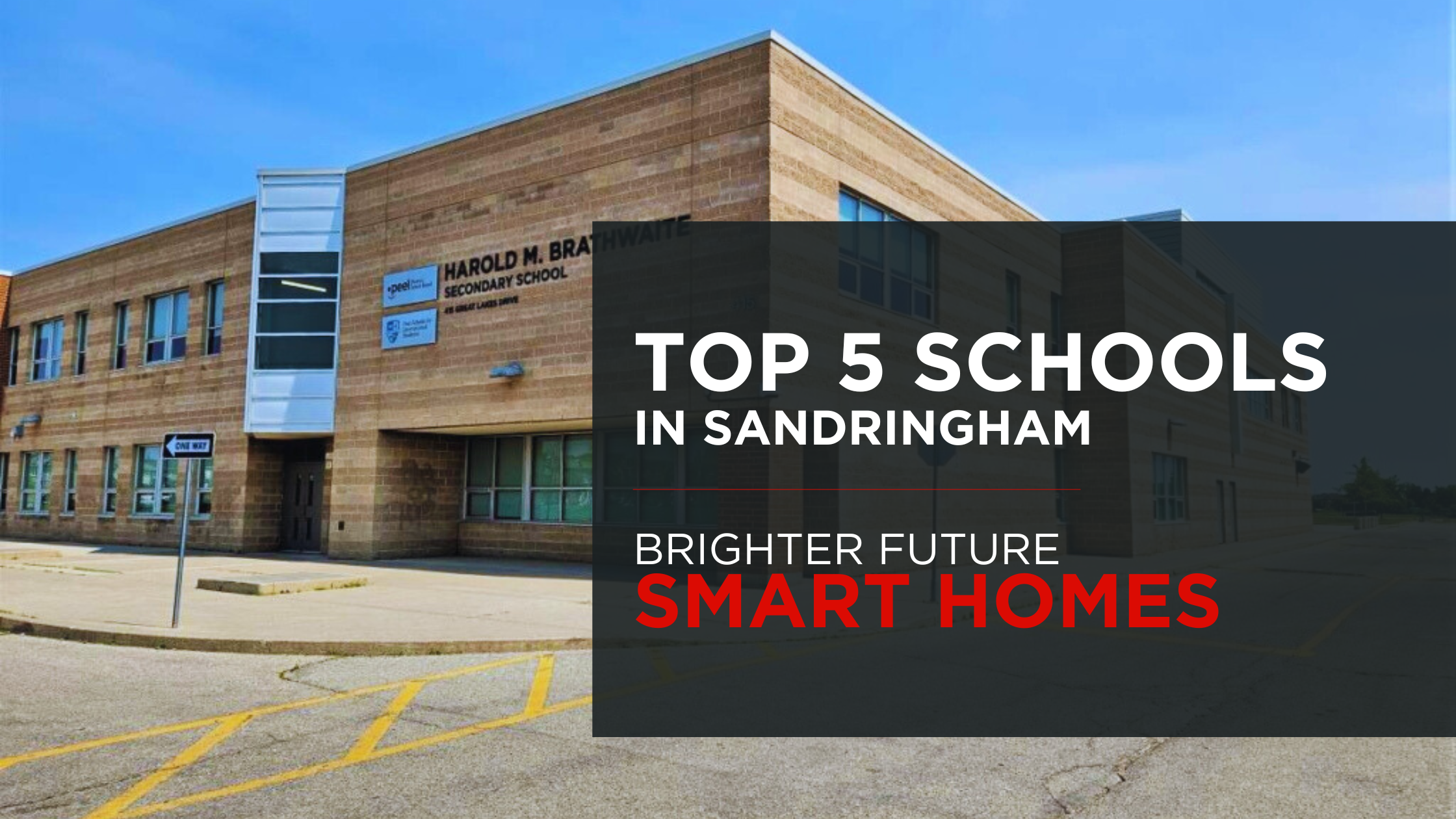
Top 5 Schools in Sandringham-Wellington, Brampton: A Comprehensive Guide for Families and Homebuyers

When families contemplate relocating to Sandringham-Wellington, a prominent neighborhood in Brampton, Ontario, the quality of local schools often tops their list of considerations. Access to esteemed educational institutions not only ensures a solid foundation for children but also enhances property values and fosters a robust community spirit. In this detailed guide, we’ll explore the top five schools in Sandringham-Wellington, delving into their unique features, academic achievements, and the benefits they offer to both students and prospective homeowners.​


1. Harold M. Brathwaite Secondary School

  • Location: 415 Great Lakes Drive, Brampton, ON​
  • Grades: 9–12​
  • Fraser Institute Score: 8.1/10​

Overview: Harold M. Brathwaite Secondary School stands as a pillar of academic excellence within the Sandringham-Wellington community. The school offers a diverse curriculum that emphasizes both STEM (Science, Technology, Engineering, and Mathematics) and the arts, preparing students for various post-secondary pathways. With a focus on critical thinking and innovation, the institution has garnered recognition as one of Brampton’s top high schools. ​

Academic Programs and Extracurricular Activities: Students at Harold M. Brathwaite have access to Advanced Placement (AP) courses, enabling them to earn university credits while still in high school. The school also boasts a robust arts program, including music, drama, and visual arts, allowing students to explore and develop their creative talents. Athletically inclined students can participate in various sports teams, fostering teamwork and physical fitness.​

Community Impact: The school’s commitment to academic rigor and holistic development attracts families to the area, positively influencing local property values. Its emphasis on community involvement and student engagement fosters a strong sense of belonging among residents, contributing to the neighborhood’s vibrant atmosphere.​

Real Estate Insight: Properties near Harold M. Brathwaite Secondary School are highly sought after. The surrounding area features a mix of detached and semi-detached homes, as well as modern townhouses, catering to various family sizes and preferences. Proximity to this top-rated school enhances property desirability and value, making it a prudent investment for homebuyers.​


2. Lougheed Middle School

  • Location: 475 Father Tobin Road, Brampton, ON​
  • Grades: 6–8​

Overview: Lougheed Middle School is renowned for its supportive learning environment and dedication to student success. The school offers a comprehensive curriculum that balances academics with extracurricular activities, promoting well-rounded development. Its focus on fostering leadership and community involvement makes it a standout institution in the neighborhood.​


Academic Programs and Extracurricular Activities: Lougheed Middle School provides a range of programs tailored to meet the diverse needs of middle school students. Beyond core subjects, the school offers specialized programs in music, arts, and technology. Extracurricular activities include clubs such as robotics, debate, and environmental stewardship, encouraging students to explore their interests and develop new skills.​

Community Impact: Proximity to a reputable middle school like Lougheed is a significant draw for families with adolescent children. The school’s programs and community initiatives contribute to the neighborhood’s family-friendly atmosphere, fostering a sense of unity and shared purpose among residents.​

Real Estate Insight: The vicinity of Lougheed Middle School features family-friendly neighborhoods with parks and recreational facilities. Properties here range from spacious single-family homes to contemporary townhouses, appealing to families seeking quality education and community engagement. Investing in this area offers both lifestyle benefits and potential for property appreciation.​


3. Fernforest Public School

  • Location: 275 Fernforest Drive, Brampton, ON​
  • Grades: JK–5​

Overview: Fernforest Public School is celebrated for its nurturing environment and commitment to early childhood education. The school’s dedicated staff focuses on building strong foundational skills in literacy and numeracy, setting students on a path to lifelong learning. Its emphasis on inclusivity and community involvement further enhances its reputation.​

Academic Programs and Extracurricular Activities: Fernforest offers a balanced curriculum that integrates core academic subjects with arts and physical education. The school places a strong emphasis on character education, teaching values such as respect, responsibility, and empathy. Extracurricular activities include clubs like chess, choir, and eco-club, providing students with opportunities to develop diverse interests.​

Community Impact: The presence of a well-regarded elementary school like Fernforest enhances the appeal of the neighborhood to young families. The school’s active involvement in community events strengthens neighborhood ties and promotes a collaborative spirit, making it an attractive place for families seeking a supportive environment.​

Real Estate Insight: Living near Fernforest Public School offers families the convenience of walking their young children to school. The area boasts well-maintained properties with ample yard space, ideal for families with young children. The strong sense of community and proximity to educational facilities make this neighborhood particularly appealing to prospective homebuyers.


4. St. Marguerite d’Youville Secondary School

  • Location: 10815 Dixie Road, Brampton, ON
  • Grades: 9–12
  • Fraser Institute Score: 8.2/10

Overview:
St. Marguerite d’Youville Secondary School is a top-performing Catholic high school located in the heart of Sandringham-Wellington. Known for combining faith-based values with academic excellence, the school has earned a strong reputation for preparing students for university, college, and life beyond graduation. It emphasizes both scholastic achievement and moral development, helping students become well-rounded individuals.

Academic Programs and Extracurriculars:
The school offers a range of programs including Advanced Placement (AP) courses, literacy-focused learning, and strong science and business departments. St. Marguerite d’Youville also excels in athletics, student leadership councils, and community service programs, giving students plenty of opportunities to grow inside and outside the classroom.

Community Impact:
Its high academic scores and strong moral foundation make it a top choice for parents looking for both academic structure and personal development for their children. The school’s positive reputation significantly boosts the appeal of surrounding real estate.

Real Estate Insight:
Homes within the boundary of St. Marguerite d’Youville are in high demand. The neighborhood features large detached homes, newer subdivisions, and well-kept townhomes—making it a solid investment area for both end-users and investors targeting family buyers.


5. Louise Arbour Secondary School

  • Location: 365 Father Tobin Road, Brampton, ON
  • Grades: 9–12
  • Fraser Institute Score: 6.9/10

Overview:
Louise Arbour Secondary School is another respected high school in Sandringham-Wellington that has been steadily gaining attention. Known for its inclusive environment and forward-thinking programs, the school caters to a diverse student population and encourages innovation and creativity.

Academic Programs and Extracurriculars:
Students can choose from programs in business, science, technology, and the arts. It also offers Specialist High Skills Majors (SHSM) and co-op education for hands-on learning. The school hosts robotics teams, multicultural clubs, and various sports, giving students a platform to shine in many areas.

Community Impact:
Louise Arbour’s commitment to inclusion, diversity, and experiential learning resonates well in a multicultural community like Brampton. The school supports both academic and social growth, contributing to a positive and inclusive neighborhood culture.

Real Estate Insight:
With many new and developing homes nearby, the area is popular among young families and newcomers. Proximity to this school is seen as a major asset when buying or selling a home, especially among those who value diversity and modern education.


How We Ranked the Schools

The schools were ranked based on several factors that matter most to families and real estate investors:

  1. Fraser Institute Score: A trusted performance rating based on standardized testing and overall student outcomes.
  2. Academic Programs: Availability of AP courses, special programs, and extracurricular activities.
  3. Reputation: Community feedback, alumni success, and engagement with families.
  4. Inclusivity and Safety: Diversity, anti-bullying policies, and student support services.
  5. Real Estate Impact: How the school’s performance and reputation influence local property demand and pricing.

This well-rounded approach ensures that the rankings reflect both educational value and real estate impact—a key combo for today’s families and investors.


Final Thoughts: Why Sandringham-Wellington is Ideal for Families

Sandringham-Wellington is more than just a collection of homes—it’s a well-planned, thriving community anchored by some of the best schools in Brampton. Whether you have young kids just starting school or teens preparing for university, the education options here are top-tier.

Benefits of Living in Sandringham-Wellington:

✅ Access to high-ranking public and Catholic schools
✅ Safe, clean, family-focused neighborhoods
✅ Easy access to Trinity Commons Mall, highways, and parks
✅ Growing community with high property value retention
✅ Walkable school zones and family-oriented amenities

Buying a home in this community isn’t just a financial decision—it’s a lifestyle choice. And for parents, choosing the right school zone means securing the best possible future for their children.


Sources and Citations

All information in this article is based on public data and verified sources:

School performance data, Fraser scores, and property insights were cross-referenced with recent listings and community reports to ensure accuracy.


📍 Thinking of moving to Sandringham-Wellington?
Let’s find a home that matches your lifestyle and gives your kids the head start they deserve.

DM or contact us today for listings near these top schools!

Why Team Arora Realty Is the Best in GTA

When it comes to real estate in the Greater Toronto Area (GTA), finding a reliable partner to guide you through buying, selling, or investing in property is crucial. At Team Arora Realty, we pride ourselves on being a step above the rest. Here’s why we are considered the best in the GTA real estate market.

1. Decades of Experience

With years of hands-on experience in the GTA real estate market, Team Arora Realty understands the nuances of the area. From urban hubs like Toronto and Mississauga to suburban neighborhoods in Brampton and Vaughan, our team has unparalleled knowledge of local market trends, pricing, and community insights.

2. Client-Centric Approach

Our focus is entirely on you, the client. Your needs, preferences, and goals drive every step of our process. We listen carefully, tailor our strategies to suit your unique situation, and ensure you feel supported and valued throughout your real estate journey. Our personalized strategies ensure that your real estate goals are met seamlessly. Whether you’re a first-time buyer, a seasoned investor, or a homeowner looking to sell, we tailor our services to meet your unique needs.

3. Top-Notch Marketing Strategies

Marketing is key to success in real estate. At Team Arora Realty, we employ cutting-edge marketing strategies to ensure your property gets the attention it deserves. From professional photography and video tours to social media campaigns and targeted advertising, our approach guarantees maximum visibility.

4. Unmatched Negotiation Skills

In the competitive GTA real estate market, securing the best deal requires expertise in negotiation. Our team excels at negotiating the best terms for buyers and sellers alike. Our track record speaks for itself: satisfied clients and exceptional deals.

5. Comprehensive Services

We provide an all-inclusive solution for every real estate requirement. Our offerings cover:

  • Property valuation
  • Staging consultations
  • Legal and financial advice
  • Assistance with mortgages

By handling every aspect of the process, we take the stress out of real estate transactions.

6. Deep Roots in the Community

Being part of the GTA community for years, we have developed strong relationships with local businesses, contractors, and service providers. This network allows us to offer valuable resources to our clients, ensuring a smooth and efficient process from start to finish.

7. Proven Track Record

Numbers don’t lie. Team Arora Realty has successfully closed countless deals, consistently exceeding client expectations. Our testimonials and reviews are a testament to our dedication and expertise.

8. Commitment to Innovation

Real estate is ever-evolving, and we stay ahead of the curve by leveraging the latest technology. From virtual property tours to data-driven market analysis, we provide tools that empower our clients to make informed decisions.

9. Award-Winning Services

Our accolades and recognition within the real estate industry underscore our excellence. We have been honored for our achievements, further solidifying our reputation as the best in the GTA.

10. Accessibility and Transparency

We believe in open communication and complete transparency. Our team is always available to answer your questions, provide updates, and offer guidance throughout the process. With Team Arora Realty, you’re never in the dark.

Why Choose Team Arora Realty?

The GTA real estate market is dynamic and competitive, but with Team Arora Realty by your side, you’re guaranteed a seamless and rewarding experience. Our dedication, expertise, and passion set us apart, making us the top choice for buyers, sellers, and investors alike.

Let Team Arora Realty show you why we are the best in the GTA!

The Future of Real Estate in Ontario’s Smaller Cities: A Growing Trend Post-COVID-19

The COVID-19 pandemic has had a profound effect on various aspects of our lives, not the least of which is where we choose to live. For years, Ontario’s major urban centers like Toronto and Ottawa have been the focal points for homebuyers. However, as remote work became a norm and the need for larger living spaces grew, smaller cities and rural areas have emerged as attractive alternatives for many Ontarians. The future of real estate in Ontario’s smaller cities is bright, with homebuyers increasingly drawn to regions such as Barrie, Guelph, and Kingston, which offer a more affordable and higher quality of life. This shift in preference has not only impacted real estate markets but also spurred infrastructure developments that continue to make these areas more accessible and desirable.

Affordability and Quality of Life: The Driving Forces

One of the primary reasons homebuyers are flocking to smaller cities in Ontario is the affordability these regions offer compared to larger metropolitan areas. Toronto, for instance, has long been criticized for its high housing prices, making it challenging for first-time homebuyers and even families to find suitable homes. In contrast, cities like Barrie, Guelph, and Kingston present more affordable options, allowing homebuyers to get more for their money. Whether it’s a larger house, a spacious backyard, or simply a quieter neighborhood, these cities provide opportunities that are increasingly rare in urban centers.

Barrie has grown significantly in recent years, and its housing market is still more affordable than Toronto’s. Its proximity to the GTA makes it a convenient location for those who still need to commute to the city but prefer a slower-paced lifestyle. The same goes for Guelph, known for its vibrant community and lower real estate prices. Guelph’s blend of urban and rural living offers residents the best of both worlds—proximity to nature and a strong community feel while still having access to amenities.

Kingston also stands out as an attractive option for those looking to relocate. Known for its rich history and picturesque landscapes, Kingston offers an affordable housing market that appeals to both young professionals and retirees. The city has also become a hub for post-secondary education, with Queens University and St. Lawrence College attracting students and academics, which further fuels the demand for housing in the region.

In addition to affordability, these smaller cities are well-known for their superior quality of life. With lower crime rates, cleaner environments, and less congestion, they provide a more peaceful, community-focused lifestyle. This has been especially appealing in the post-pandemic era, where many people have re-evaluated their living environments in search of more space and serenity.

The Role of Remote Work in Shaping Real Estate Preferences

The rise of remote work has been another significant factor in driving the move toward Ontario’s smaller cities. As many companies adopted flexible work arrangements during the pandemic, the necessity of living close to major employment hubs diminished. With the ability to work from anywhere, many homebuyers have chosen to move away from the hustle and bustle of big cities in favor of more spacious, affordable homes in smaller cities and rural areas.

Homebuyers are no longer restricted by their proximity to their workplace, leading to a widespread reconsideration of what makes an ideal living environment. For many, the answer has been to prioritize space, tranquility, and a higher quality of life over the convenience of urban living. This shift has brought attention to areas like Barrie, Guelph, and Kingston, where residents can enjoy a balanced lifestyle without sacrificing their professional careers.

Infrastructure Developments: Making Smaller Cities More Accessible

As more homebuyers consider moving to smaller cities, the demand for improved infrastructure has followed. Ontario has recognized the growing importance of these regions and is investing in infrastructure projects that will support their long-term growth. New transit routes, schools, healthcare facilities, and recreational spaces are being developed to accommodate the rising population and make these areas even more attractive.

In Barrie, for example, the extension of the GO Transit train service has made commuting to Toronto more feasible, which has been a significant factor in the city’s growing appeal. With enhanced public transit, residents can enjoy the benefits of a smaller community while still being connected to the economic opportunities of the GTA.

Guelph is also benefiting from infrastructure improvements. The city has focused on enhancing its public transportation system and road networks to ensure smooth connectivity to neighboring regions. Additionally, Guelph has made significant investments in its educational infrastructure, which includes new schools and community centers, making it an ideal location for families.

Kingston, with its growing population, has seen several infrastructure developments, including improved healthcare services and new housing projects. The city is also focusing on expanding its transportation networks to make commuting easier for residents who travel to nearby towns and cities for work.

These infrastructure developments play a crucial role in ensuring that smaller cities can accommodate the influx of new residents without compromising the quality of life. The focus on education, healthcare, and transit systems reflects a commitment to creating sustainable communities that offer all the conveniences of urban living in a smaller, more peaceful setting.

The Future of Ontario’s Smaller Cities

As Ontario continues to evolve in the post-pandemic era, smaller cities like Barrie, Guelph, and Kingston are poised for significant growth. The combination of affordability, quality of life, and improved infrastructure makes these areas attractive to a wide range of homebuyers, from young professionals to retirees.

The future of real estate in these smaller cities looks promising as more people prioritize spacious homes, access to nature, and a strong sense of community. With the added convenience of enhanced transit routes and other infrastructure developments, these cities are well-equipped to meet the demands of their growing populations.

In conclusion, the shift toward Ontario’s smaller cities and rural areas is more than a passing trend. It represents a fundamental change in how we think about where and how we want to live. The pandemic has accelerated this shift, and with ongoing investments in infrastructure, the future of real estate in Ontario’s smaller cities looks brighter than ever. As more homebuyers seek affordability, quality of life, and the freedom that comes with remote work, places like Barrie, Guelph, and Kingston are emerging as the next great real estate frontiers in Ontario.

Mississauga Location

268 Derry Rd W Unit 101, Mississauga, ON L5W 0H6